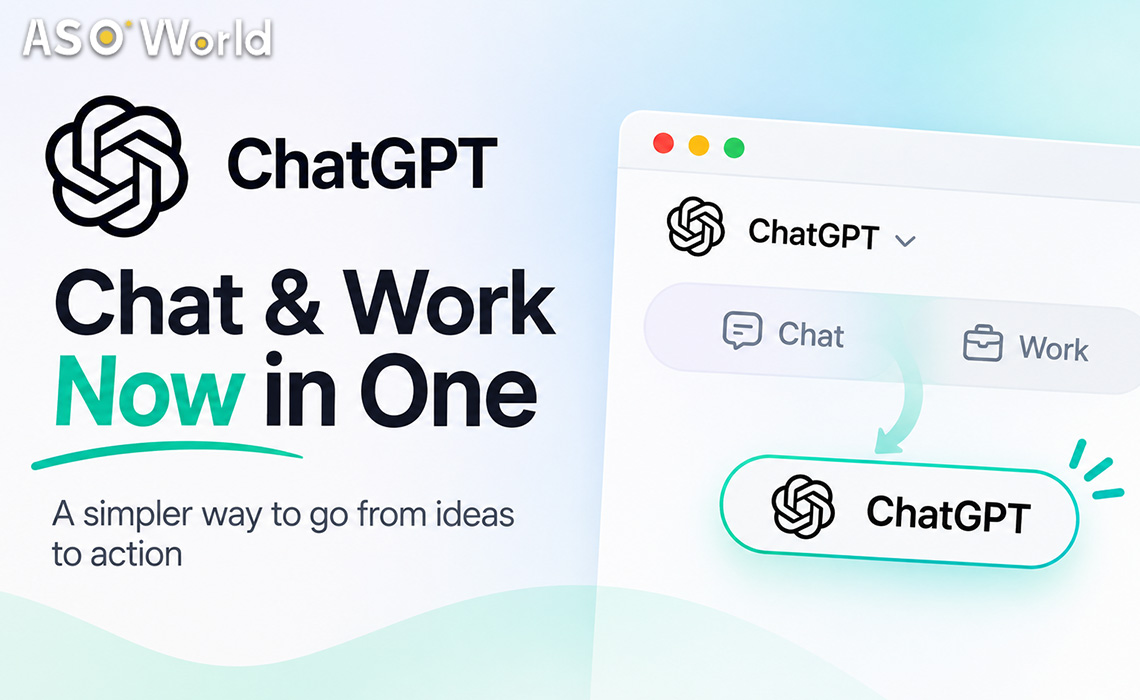

OpenAI is simplifying one of the most confusing parts of its desktop app. In an email sent to users on November 2, 2026, the company said it is merging the Chat and Work tabs inside ChatGPT into a single experience, so that people can move from brainstorming an idea to having ChatGPT carry it out without switching views. Codex, OpenAI's coding tool, will remain a separate section of the desktop app.
The change also includes a less visible shift: ChatGPT and Codex will draw from the same usage allowance. Below is a clear summary of what OpenAI has said, what it has not said, and how the move compares with a similar redesign from a rival.
Key Takeaways
- What is changing: The Chat and Work tabs in ChatGPT will become one combined experience.
- What stays separate: Codex remains its own experience in the ChatGPT desktop app.
- Usage limits: ChatGPT and Codex will share a single token allowance pool.
- Rollout: A select group of users gets it first, to provide feedback, before a wider release. No dates have been announced.
- Impact: OpenAI says most users will not notice a difference in usage, but some may hit usage resets more often.
The Problem OpenAI Is Solving
The ChatGPT desktop app has accumulated layers. At the top level there is a ChatGPT section and a Codex section. Inside ChatGPT there are separate Chat and Work tabs. That structure makes it easy to forget where a project lives, or which tab is best suited to a given task.
Merging Chat and Work is meant to remove that decision. Instead of exploring an idea in one place and executing it in another, users work in one view throughout.
What the New Experience Offers
| Area | Before | After the merge |
|---|---|---|
| Tabs in ChatGPT | Separate Chat and Work tabs | One combined experience |
| From idea to output | Explore in one tab, carry out tasks in another | Explore and have ChatGPT carry the idea through in the same place |
| Files and plugins | Not detailed in the announcement | Can be brought into the same view as the work progresses |
| Codex | Separate section of the desktop app | Still separate |
| Usage allowance | Not described as a shared pool | ChatGPT and Codex draw from the same token pool |
OpenAI described the goal in its email as letting users move from exploring an idea to having ChatGPT see it through, with files and plugins brought in as needed. Examples it gave include asking ChatGPT to build a website, create a presentation or do things on the web, while the user reviews and guides the work.
The Usage Limit Change
The most practical detail is the shared allowance. After the change, ChatGPT and Codex will both use tokens from the same pool. OpenAI says this will not affect most users, but depending on how heavily someone works and which model they use, some people could wait for their allowance to reset more often.
The company has not published numbers for the pool, nor said how it will differ across plans. For users who rely heavily on both products, that means usage may be worth watching closely once the change reaches their account.
Who Gets It, and When
OpenAI says the combined experience will initially go to a select group of users, who will give feedback before it is rolled out more widely. It has not named dates, regions or plan tiers. That means the single-view layout will not appear for everyone at once, and many users will continue to see separate Chat and Work tabs for now.
How It Compares With Claude's Interface Merge
OpenAI's move closely follows one from Anthropic. In September 2026, Anthropic brought Claude's chat and Cowork functions into one window, alongside Artifacts and Claude Design, and said Claude would route requests automatically rather than asking users to choose a tab.
| Area | OpenAI (ChatGPT) | Anthropic (Claude) |
|---|---|---|
| Announced | November 2, 2026 | September 16, 2026 |
| What was combined | Chat and Work tabs | Chat, Cowork and Artifacts, with Claude Design available throughout |
| Routing | Not described in detail | Requests are routed automatically across the app |
| Initial rollout | Select users, then wider release | Pro and Max plans first; free and team tiers planned later |
| Extra features | Not announced | Dedicated slide and document creation, with sharing and mobile progress tracking |
| Usage allowance | Shared between ChatGPT and Codex | Not described in the announcement |
The comparison is limited by what each company has published. OpenAI's note is a short customer email, while Anthropic's announcement spelled out more of the product. Both reflect the same direction: AI assistants are being redesigned as single workspaces rather than collections of separate modes.
Why It Matters for AI App Developers and Marketers
This section is ASOWorld's editorial analysis, not a statement from OpenAI.
The redesign signals how AI products expect to be used, and that matters to anyone building on or competing with them:
- From chat to workspace. Assistants that build websites, presentations and web tasks from a single conversation compete directly with standalone productivity, design and presentation apps.
- Plugins as a distribution channel. The ability to bring in files and plugins suggests integrations will be a way for apps to reach users inside the assistant, so teams may want to consider how their product could appear there.
- Usage costs are visible. Shared allowance pools show that compute remains a limiting factor, which affects how developers plan features that depend on heavy model use.
- Simpler products win trust. Reducing choices at the start of a task is a product lesson for any app, since confusion about where to begin often costs users early.
For more coverage of AI platforms and their impact on app businesses, browse the AI Tech section on Marketing Trending.
📱 App Marketing Angle
As AI assistants take on more tasks directly, apps in productivity, design and creation categories face new competition and new discovery paths. Clear positioning, strong ratings and well-optimised store listings help apps stand out for users who still search for dedicated tools. See how ASOWorld's AI app marketing solutions help AI apps turn shifts in the market into rankings, installs and revenue.
What to Watch Next
- Rollout timing. When the combined experience reaches all users, and on which platforms.
- Usage pool details. Whether OpenAI publishes limits and how they differ by plan.
- Codex integration. Whether Codex stays separate or is later brought closer to the combined view.
- User reaction. Feedback from the first group could shape the final design.
Quick Answers: ChatGPT Chat and Work Merge
What is OpenAI merging?
The Chat and Work tabs inside ChatGPT, into a single combined experience.
Does Codex merge too?
No. Codex stays a separate experience in the ChatGPT desktop app.
What happens to usage limits?
ChatGPT and Codex will draw tokens from the same allowance pool. Most users will not notice, but some may wait for resets more often.
When will I get the new view?
OpenAI is releasing it to a select group of users first. A wider rollout date has not been announced.
What can I do in the combined view?
Bring in files and plugins and ask ChatGPT to build a website, create a presentation or do things on the web, while you review and guide the work.
Did Claude make a similar change?
Yes. In September 2026, Anthropic combined Claude's chat, Cowork and Artifacts into one interface.

 Follow Us on Facebook