
In a notable shift during Alphabet's Q1 2026 earnings call on April 29, Google Chief Business Officer Philipp Schindler hinted that the company is actively reconsidering its stance on advertising inside the Gemini AI app. While the standalone Gemini experience has remained ad-free since launch, Schindler's comments suggest that could change sooner than many expected.
"Our focus right now is on AI Mode, but it's fair to say that we really believe a format that works well in AI Mode would transfer successfully to Gemini app," Schindler told investors. He added that "if done well, ads can be really valuable."
The comments mark the clearest signal yet that Google is preparing to extend its advertising empire into its flagship consumer AI product, which has now reached 750 million monthly active users, according to a Google Keyword blog post.
The Staged Monetization Playbook
Google's approach appears characteristically methodical. Rather than rushing ads into Gemini, the company is following a staged monetization path: test ad formats in AI Mode (the conversational version of Search), iterate on performance, then port successful formats to the standalone Gemini app.
Advertising trade publication Adweek reported that Google has already briefed agency buyers on a targeted 2026 rollout for Gemini ad placements.
Meanwhile, independent traffic analysis by DiscoveredLabs found that multiple advertising SDKs already load when the Gemini app starts - they currently return null responses, but the infrastructure is in place and dormant.
Google is already testing several novel advertising mechanics within AI Mode, including:
- Conversation-level ad eligibility, which shifts targeting from single-query keywords to session-level intent
- Direct Offers, a pilot that surfaces exclusive retailer deals inside conversational responses
- Performance Max / AI Max for Search integration, allowing existing Google Ads campaigns to compete for AI placements
Early performance data from Digital Applied shows ads appearing in 25.5% of AI Mode results, with engagement lifts over traditional search placements.
The AI Monetization Landscape: Three Divergent Paths
Google's move comes at a pivotal moment in the AI industry's monetization debate, with three major players charting distinctly different courses.
OpenAI began testing ads in ChatGPT for free and Go-tier subscribers in the U.S. earlier this year. The company said ads are clearly labeled, appear below chatbot responses, and do not influence answers. The move was widely seen as necessary to help fund OpenAI's ambitious infrastructure commitments, which reportedly topped $1.4 trillion in 2025 .
Anthropic seized the moment with a multi-million-dollar Super Bowl campaign featuring the tagline: "Ads are coming to AI. But not to Claude." The 60-second pregame and 30-second in-game spots depicted humorous scenarios of AI ads gone wrong, and the campaign delivered measurable results - Forbes reported an 11% jump in daily users following the ads.
Anthropic CEO Dario Amodei said the personal nature of Claude conversations would make ads feel "incongruous" and "in many cases, inappropriate".
Google occupies a unique middle ground. With 82.3billion inquarterly ad revenue (Q4,2025) - 63.1 billion from Search alone - and 350 million paying subscribers across its subscription bundles (including Fitbit Premium and expanded photo storage), Google has the luxury of patience. It can build subscription revenue while carefully calibrating its ad strategy.
Forrester VP and principal analyst Dipanjan Chatterjee told The Register: "The truth is that despite protestations, consumers have progressively become comfortable with a give-and-take model... The future of consumer-facing AI models will likely be one that is interrupted with advertising, except for those who pay to spare themselves that interruption".
What's Next: Google Marketing Live and Beyond
All eyes now turn to Google Marketing Live 2026, scheduled for May 20, where the company is expected to unveil further details about its AI advertising roadmap. Industry observers anticipate announcements around:
- Official Gemini ad placement formats and specifications
- Integration pathways for existing Google Ads campaigns into AI surfaces
- Privacy guardrails and data usage policies for ad targeting within conversational AI
- Potential rollout timelines for the Gemini app
Google SVP Nick Fox, when asked directly about ads in Gemini by WIRED, notably said he was "not ruling them out".
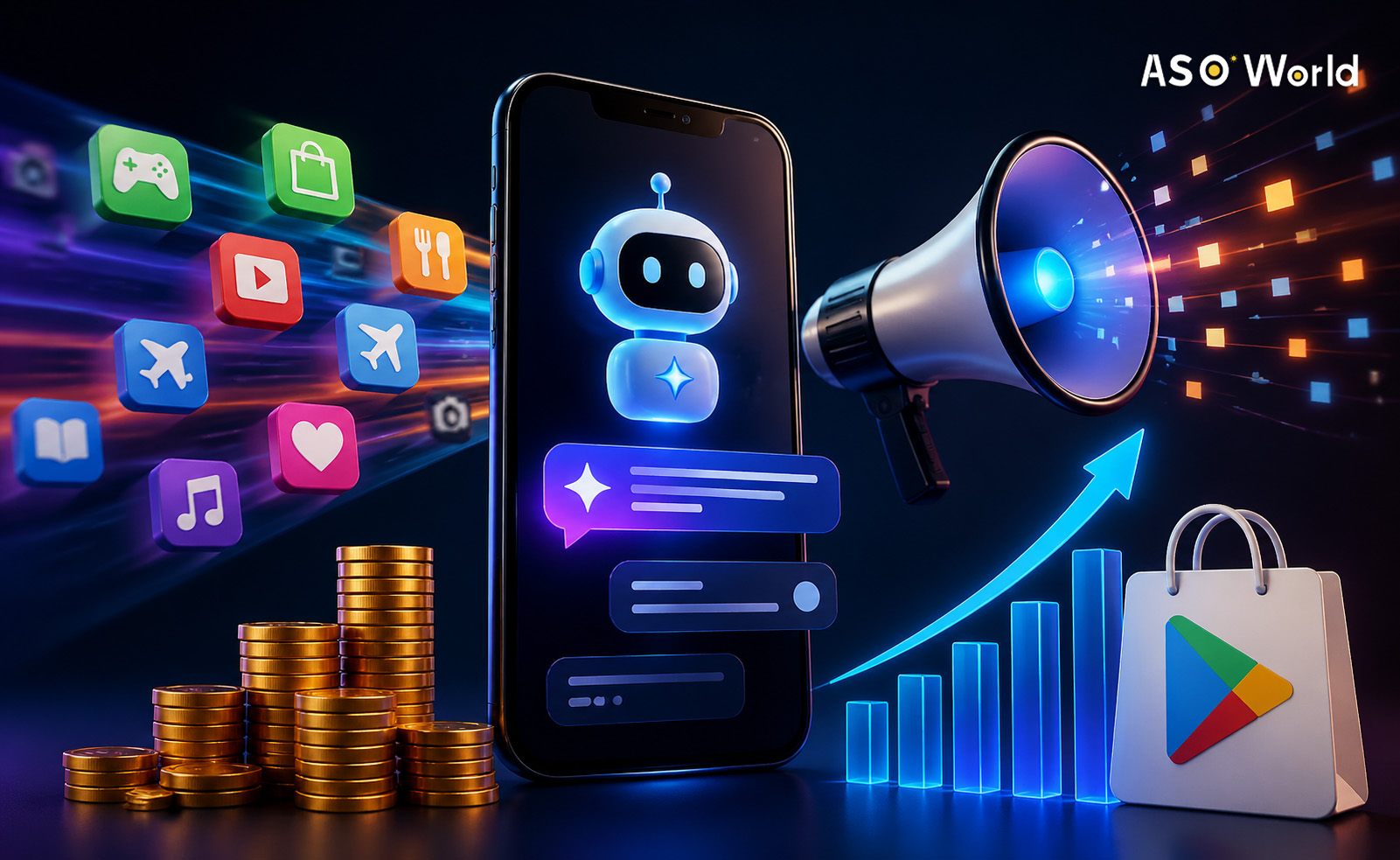
📱 What Gemini Ads Mean for Google Play App Marketers
If Google brings ads to Gemini, it creates an entirely new paid acquisition channel that app developers and marketers on Google Play will need to factor into their user acquisition strategies. Here's why it matters:
- New Ad Inventory: Gemini's 750 million MAU represents a massive, currently untapped audience. App install campaigns could soon compete for conversational ad placements alongside traditional Search and Display inventory.
- Intent-Level Targeting: Because Gemini processes complex, multi-turn conversations, ad targeting could move beyond keyword matching toward deeper intent signals - potentially improving install-to-action conversion rates for well-optimized campaigns.
- ASO Becomes Even More Critical: As AI-generated answers increasingly influence discovery, your app's store listing metadata, ratings, and review sentiment will feed into how AI surfaces your app. A strong ASO foundation on Google Play becomes table stakes.
- First-Mover Advantage: Advertisers who adapt early to AI-native ad formats - shorter creative, conversational alignment, session-level bidding - stand to capture lower CPIs before the auction becomes saturated.
To stay ahead, developers should audit their Google Play store presence now and prepare for AI-driven discovery channels. Explore ASOWorld's Google Play ASO solutions →
The Bigger Picture
Whether ads eventually appear in Gemini will depend on how well Google can balance monetization with user experience - a tension the company has navigated for two decades across Search, YouTube, and Maps. But the direction of travel is clear. As Schindler noted on the earnings call: "Ads have always been a big part of scaling products to reach billions of people".
Apple, too, appears to be preparing for an ad-supported AI future. The iOS 26.5 beta seeded on April 20 revealed that Apple is "laying the groundwork for ads in the Apple Maps app," while continuing to test features like end-to-end encryption for RCS messages and proximity pairing for third-party wearables in the EU.
For developers, marketers, and advertisers, one thing is increasingly certain: the AI chat interface is on track to become the next major advertising surface. The only question is how quickly - and who gets there first.
 Follow Us on Facebook