
At first glance, OpenAI’s launch of Codex on mobile through the ChatGPT app might seem like a minor convenience—after all, few developers want to type complex code on a smartphone screen.
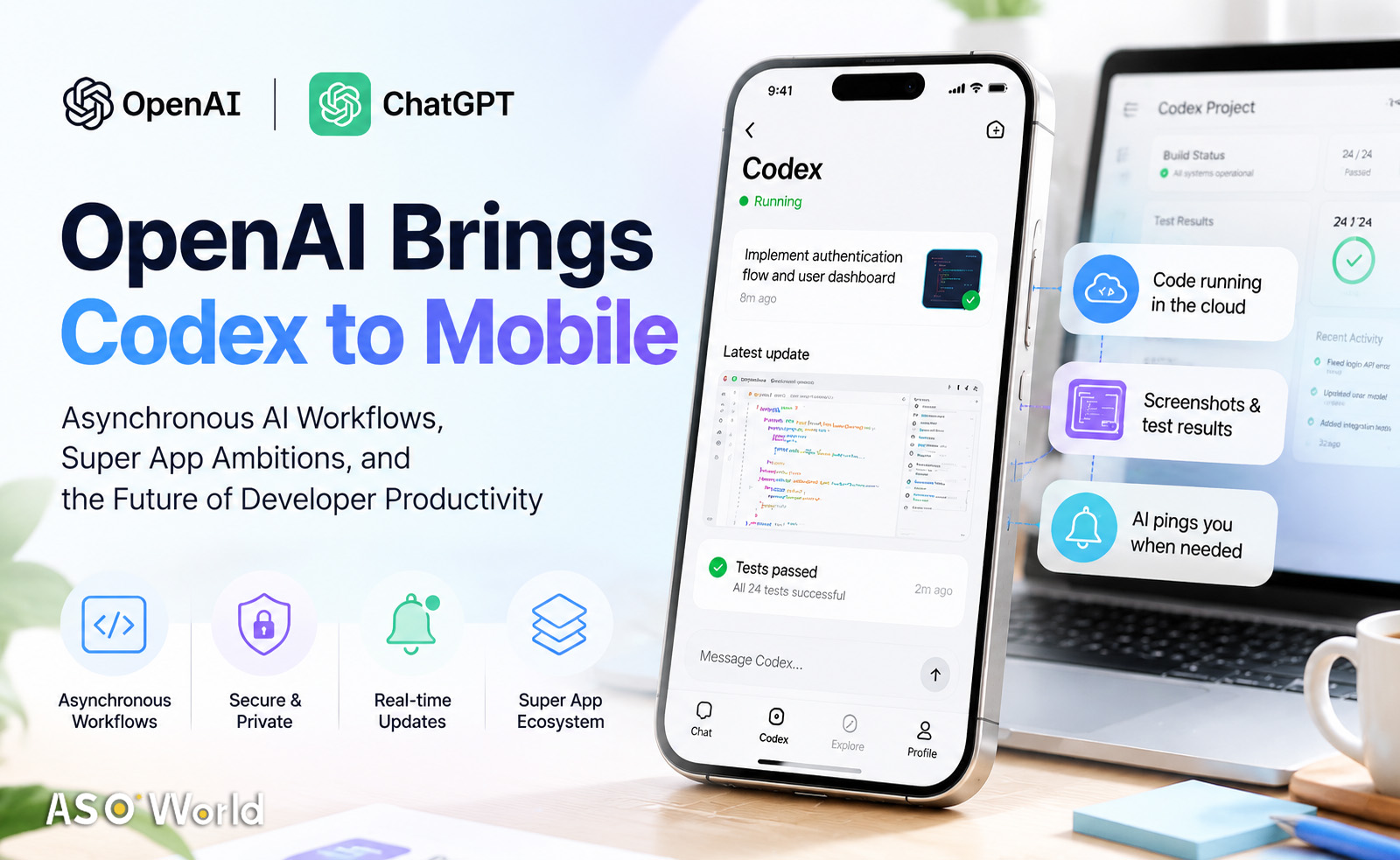
But here’s the twist: this isn’t about coding on the go. Instead, the ChatGPT mobile app acts as a secure intermediary between your projects and the machines where Codex is actually running—whether that’s a Mac mini at home or a remote enterprise server. Your files, credentials, and session context stay protected while Codex continues to operate, sending updates, screenshots, and test results directly to your device. When a decision or intervention is required, the AI notifies you instantly, allowing work to continue without unnecessary downtime.
This move is more than a reaction to competitors like Anthropic, whose Claude Code offered mobile access last fall. It’s a strategic step toward OpenAI’s super app vision, laying the groundwork for an ecosystem that could unify ChatGPT, Codex, and Atlas into a seamless, cross-device AI experience. For developers, product managers, and AI-focused marketers, this isn’t just news—it’s a signal of a broader paradigm shift, where AI evolves from a synchronous tool you wait on into an autonomous agent you manage. Explore our guide on leveraging OpenAI's "Apps in ChatGPT" is Changing the Future of App Interaction to see actionable strategies for developers and ASO managers.
Mobile Codex: More Than Just Coding on the Go
The Strategic Move Behind Mobile Codex
OpenAI has made Codex accessible on iOS and Android through the ChatGPT app. While the ability to review code or test outputs on a smartphone seems minor, the strategic significance lies in enabling continuous asynchronous workflows.
- What happened: Mobile Codex allows AI-driven tasks to run in the background, sending updates, screenshots, and test results to a mobile device.
- Why it matters: Developers no longer need to be tethered to their main workstations. AI can autonomously handle routine tasks while humans focus on higher-value decisions.
- Who is affected: Mobile developers, engineering leads, project managers, and digital product teams juggling multiple projects.
Practical Implications for Workflows
Asynchronous mobile AI means:
- Continuous project monitoring without desk dependency.
- AI acting as a partner, pinging only when human judgment is required.
- Reduced idle time and bottlenecks in software development.
This fundamentally alters how productivity is measured, shifting from hours spent to throughput achieved with minimal human supervision. Learn how next-gen AI models are reshaping user acquisition and retention in our AI-driven app marketing insights.
From Co-Pilot to Teammate: The Rise of Autonomous Workflows
How This Changes Productivity
The mobile Codex experience transforms AI from a reactive tool into an act. If a test fails or an architectural decision is required, the AI pings your phone. You provide guidance, and it continues autonomously. This reduces idle time and increases throughput, making AI a true partner in software development.
Why It Matters
Asynchronous workflows shift humans from operators to managers. This model accelerates project delivery, reduces human bottlenecks, and opens the door for more sophisticated AI-driven processes across teams.
Who Benefits
Software engineers, project managers, enterprise IT teams, and AI-focused product managers who want to maximize efficiency without increasing human oversight.
Broader Industry Implications
This shift toward autonomous AI workflows will redefine benchmarks for software productivity and AI ROI. Tools will be evaluated less on raw intelligence and more on their ability to integrate seamlessly, operate continuously, and free human time for strategic decisions. Dive into our analysis on how generative AI is transforming mobile apps for a deeper understanding of strategic opportunities.
FAQ
Q: What practical use cases does the Codex mobile integration unlock?
A: Rather than coding directly on a phone, developers can manage asynchronous workflows. For example, you can leave the office while Codex compiles code or runs tests locally. If it hits an error or requires architectural guidance, it pings your phone via the ChatGPT app, allowing you to prompt a fix and keep the project moving without needing to return to your desk. Check out our practical advice for using ChatGPT in app promotion and ASO
Q: How does OpenAI's "super app" strategy impact the AI industry and search traffic?
A: By combining ChatGPT, Codex, and the Atlas web browser into a unified application, OpenAI is creating a closed ecosystem. This intercepts user queries before they ever reach traditional search engines like Google or app stores, drastically reducing conventional search traffic and forcing marketers to optimize their content for AI ingestion rather than search engine crawlers.
Q: What are the productivity implications of asynchronous AI workflows?
A: Asynchronous workflows shift the human role from "operator" to "manager." Instead of sitting idly while AI tools process tasks, professionals can run multiple agentic processes in the background. This drastically reduces downtime and accelerates project delivery, fundamentally changing ROI calculations for software development.
Q: How does this move position OpenAI against competitors like Anthropic?
A: It neutralizes Anthropic's first-mover advantage with Claude Code, which offered mobile access earlier. More importantly, it signals that the competitive moat in generative AI is no longer just model intelligence, but seamless, secure, cross-device workflow integration that locks users into a specific ecosystem.
 Follow Us on Facebook