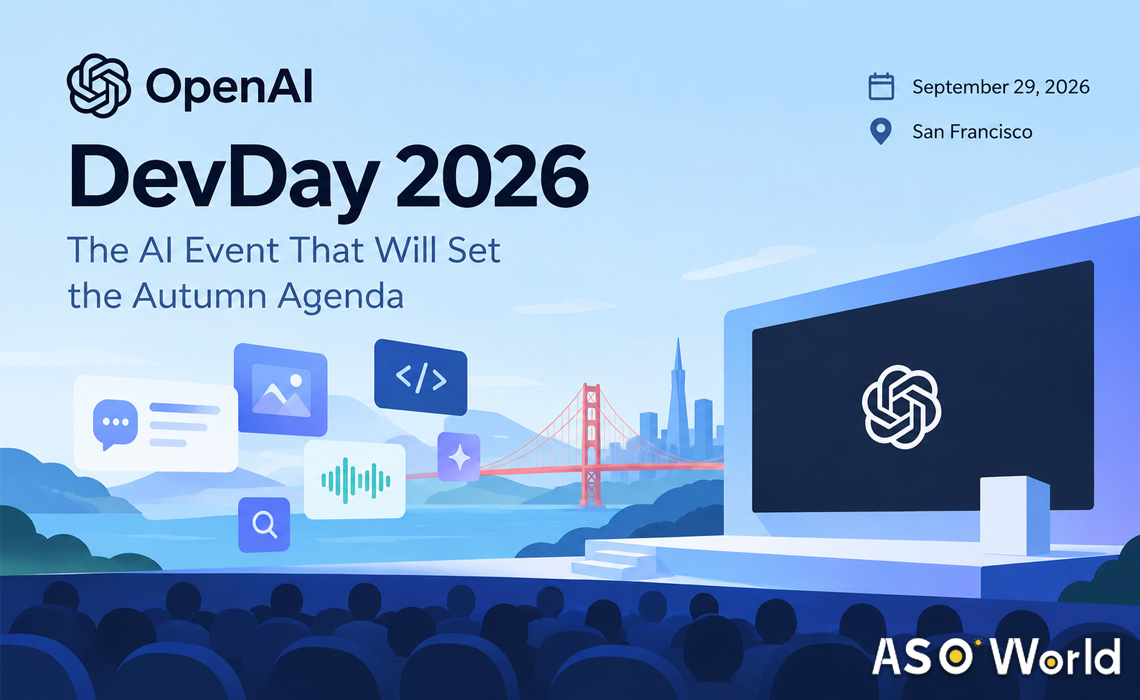

OpenAI DevDay returns to San Francisco on September 29 at a point when artificial intelligence has become less of a single product category and more of a pressure on every software company. AI can now write, speak, search, generate images, summarise meetings and assist with code. The question DevDay must answer is more difficult: what does the next useful, reliable layer of AI actually look like?
The opening keynote will be livestreamed, ensuring the event will be followed well beyond the developers in the room. That global interest is justified. A new model can produce a dramatic headline, but changes to tools, pricing, safety controls and the way software connects to AI can affect thousands of products almost immediately.
Look beyond the model name
It is easy to reduce an AI event to a race over benchmark scores. Those numbers matter, but they rarely reveal whether a product works in real life. Developers care about latency, cost, predictable behaviour, data handling and how much work is needed to turn a clever demonstration into something people can rely on.
That is why the most consequential DevDay news may sit around the edges of any flagship announcement. Watch for improvements to voice interaction, image and video understanding, agentic workflows, evaluations, developer controls and ways to monitor what a model does. A quieter release that makes AI easier to test or safer to deploy can have more impact than a flashy feature that remains limited to a demo.
AI is moving from answers to actions
The first wave of consumer AI was largely conversational: ask a question, receive an answer. The next wave is about completing tasks across tools and services. That shift is attractive because it could remove tedious work. It is also difficult because a system that takes actions must be more transparent, more controllable and more accountable when it gets something wrong.
At DevDay, pay attention to how OpenAI frames this balance. Does it describe clear permissions? Can users review or interrupt an action? Are there limits around sensitive data and high-stakes decisions? The quality of those answers matters as much as the intelligence of the system itself.
The practical tests after the keynote
Once the applause fades, three questions will separate an important announcement from an interesting one. Is it available now? Who can access it, and in which regions? And what does it cost to use at scale? AI announcements often blend releases, previews and research direction into one presentation. Readers should treat those categories differently.
DevDay also provides a useful snapshot of the industry’s mood. In 2026, AI companies are being judged not only on novelty but on whether their products respect users, support creators and make sense economically. The winning message will be one that shows more capability without assuming that more automation is automatically better.
How to follow: OpenAI has confirmed a September 29 event in San Francisco and a livestreamed opening keynote. See the official DevDay page. A post-keynote update should add only confirmed products, access details and prices.

 Follow Us on Facebook