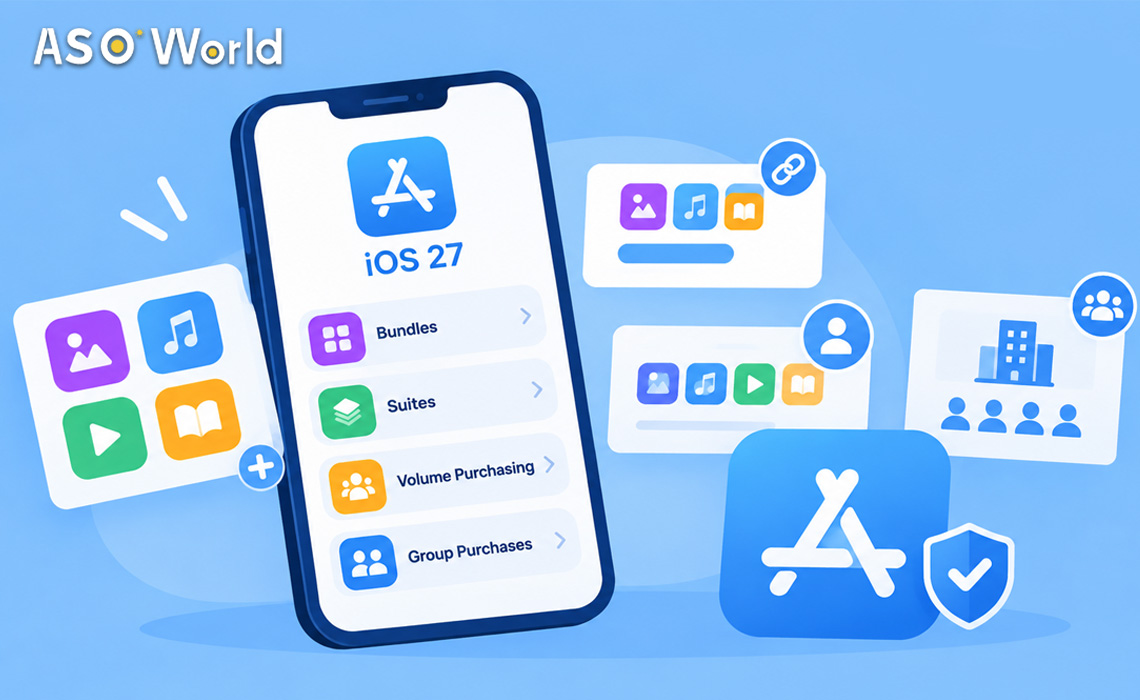

Apple has officially flipped the switch on the biggest subscription expansion in App Store history. As part of its iOS 27 update, the company is rolling out four new ways for developers to sell recurring access: Bundles, Suites, Volume Purchasing, and Group Purchases. The first of those capabilities went live on September 16, 2026 — multiseat purchasing is now enabled by default for subscriptions in App Store Connect — with the full rollout continuing through October and into winter 2026. For subscription app developers and app marketers, the shift is hard to overstate: for the first time, a single App Store purchase can cover multiple apps, multiple developers, or an entire organization.
The changes were teased at WWDC 2026 in June, when Apple promised subscription options "for groups, businesses, and schools." This week's developer-facing update turns that promise into concrete infrastructure, and it comes with a strict requirement: developers who want in must be running StoreKit 2, and access to Bundles and Suites is only granted through a formal request process. Here's everything you need to know, including the launch timeline, how the four models differ, and what developers should do before October 22.
Four new subscription models, one ecosystem
Apple is broadening what a subscription can actually be. Previously, an auto-renewable subscription was almost always a one-user, one-app transaction. The iOS 27 era introduces a spectrum of configurations — from a single subscription shared across a developer's entire portfolio to seats purchased in bulk for an entire company. Understanding the difference between each model is the key to picking the right monetization strategy:
| Model | What it does | Who it's for | Availability |
|---|---|---|---|
| Bundles | Multiple subscriptions combined into a single purchase — within one app, across a developer's apps, or across different developers' apps. | Multi-app developers and cross-developer partnerships. | Later this year (iOS 27, iPadOS 27, macOS 27, tvOS 27+) |
| Suites | One subscription that works seamlessly across a set of apps from a single developer. | Developers with a portfolio of related apps. | Later this year (iOS 27 and later) |
| Volume Purchasing | Organizations buy subscription seats in one Apple In-App Purchase and assign them via a device management provider. | Businesses and schools using Apple Business Manager / Apple School Manager. | October 22, 2026 |
| Group Purchases | A subscriber buys multiple seats in a single purchase and invites others to join; Apple handles invitations and seat assignment. | Small businesses, departments, teams, collaborator groups — no IT or procurement needed. | Winter 2026 |
Bundles: the streaming playbook comes to the App Store
Bundles are the headline feature — and the closest the App Store has come to a Netflix-style "more for less" offer. Subscriptions inside a Bundle can belong to a single app, span multiple apps from the same developer, or even combine apps from different developers. That last option is a first: Apple is effectively letting independent companies form commercial partnerships inside its In-App Purchase ecosystem, packaging their subscriptions into one transaction at a combined price point.
The inspiration is obvious. As TechCrunch noted when the feature was announced in June, streaming companies like HBO and Disney have spent years packaging subscriptions together to boost perceived value and cut churn. For apps, the equivalent would be a creativity bundle combining a camera app, an editing tool, and a publishing app — or a productivity bundle pairing one developer's to-do list with another's calendar. Developers with overlapping audiences but non-competing products are the natural candidates.
Apple controls the purchase experience end to end: the App Store checkout displays every app included in a Bundle, so users immediately see what they're unlocking and can download and access the content right away.
Suites: one subscription across your whole portfolio
Suites take the opposite approach. Instead of combining multiple subscriptions, a Suite is a single subscription that works across a set of apps from one developer. For studios running several apps around a shared service or content library, that eliminates the need to maintain separate subscription products per app — one recurring charge unlocks the entire portfolio, which tends to boost both retention and cross-app engagement.
Notably, Suites are not available as standalone purchases. They exist purely as a portfolio-access product, which gives developers a cleaner way to structure pricing tiers than juggling a dozen subscription groups in App Store Connect.
Multiseat purchasing: already live, and on by default
The most time-sensitive news is multiseat purchasing. As of September 16, 2026, it is enabled by default for all subscriptions in App Store Connect — which means developers should check their subscription settings now, because the capability is active unless they explicitly disable it. Apple gives full control: developers can switch multiseat off entirely or manage availability separately across the App Store, Apple Business, and Apple School Manager.
The feature splits into two consumer-facing models. Volume Purchasing, launching October 22, targets organizations that use Apple Business Manager or Apple School Manager — they can buy subscription seats through a single In-App Purchase and assign them through their device management provider. Group Purchases, arriving this winter, targets looser groups: a subscriber buys multiple seats in one transaction and invites colleagues or collaborators to join, with Apple handling the invitation flow and seat assignment. No IT department, no procurement, no MDM.
Rollout timeline at a glance
| Date | Milestone |
|---|---|
| September 16, 2026 | Multiseat purchasing enabled by default in App Store Connect; developers can opt out or manage availability per channel. |
| October 22, 2026 | Volume Purchasing launches for Apple Business Manager / Apple School Manager organizations. |
| Later in 2026 | Bundles and Suites become available in iOS 27, iPadOS 27, macOS 27, tvOS 27 or later (access via request form). |
| Winter 2026 | Group Purchases launch for teams, departments and small businesses. |
What this means for app developers
For subscription businesses, the potential customer unit has just expanded from a single user to a group or organization. Historically, developers chasing B2B revenue needed separate sales pipelines, invoicing, and account-management systems to support multiple users. Apple's new purchasing options drag much of that scenario into the App Store's native subscription infrastructure — meaning App Store Connect now covers individual subscriptions, packaged bundles, portfolio-wide suites, and bulk seats in one place.
The practical consequences are significant. Group Purchases could unlock entirely new buyer segments — a work team splitting the cost of a productivity app, a small business outfitting five employees, a department inside a larger company — all paying through consumer-grade checkout with zero administrative overhead. The r/iOSProgramming community has already spotted the opportunity, with developers noting that multiseat subscriptions now work without the buyer needing Apple Business or Apple School Manager. Meanwhile, Apple's broader iOS 27 App Store toolkit — retention messaging to reduce churn, new product page headers, and 12-month commitment pricing — gives subscription apps more levers than ever to convert and keep users.
📱 App Marketing Angle
For app marketers, the takeaway is to treat these as positioning tools, not just billing features: Bundles let you co-market with complementary developers, Suites let you upsell your own portfolio, and multiseat turns your pricing page into a team product. Monitoring how competitors configure these new purchase options — and which bundles they form — will be a core part of App Store competitive intelligence from now on.
What developers need to do now
Apple has published clear instructions for getting ready, and the timeline is short:
- Adopt StoreKit 2 for all Apple In-App Purchases — it is the mandatory foundation for Bundles and Suites.
- Review your multiseat settings in App Store Connect — the capability is on by default; decide whether to keep, limit, or disable it across the App Store, Apple Business, and Apple School Manager.
- Submit the Bundles and Suites request form — access is not automatic; Apple requires developers to review eligibility and technical requirements before offering either configuration.
- Plan for October 22 — Volume Purchasing launches next month, so organizations in your addressable market may begin buying seats soon after.
What comes next
The subscription expansion lands alongside a busy fall for Apple: iOS 27.2 betas are already out, the foldable iPhone Duo arrives October 23 on iOS 27.1, and Group Purchases are expected in the winter months. For developers, the message from Cupertino is unambiguous — the App Store is no longer just a marketplace for single-user apps, but a full-stack commerce platform for subscriptions at every scale. The developers who configure their purchase options early will be the ones capturing the B2B and team-market upside first.

 Follow Us on Facebook