
Apple is reportedly exploring sweeping App Store reforms designed to raise the marketplace's margins and generate additional recurring revenue — a strategy shift that lands at the very moment the App Store's existing business model is being reshaped by regulators and courts around the world. According to Bloomberg's Mark Gurman, the effort is being driven by new CEO John Ternus and services chief Eddy Cue, and it was influential enough that longtime App Store overseer Phil Schiller stepped away from the marketplace rather than participate in the new direction.
The reported reform push reveals a deliberate strategy at Apple: treat the App Store as a services business that must lift App Store margins and extract more recurring revenue from the 1.5 billion subscribers who now flow through Apple's services ecosystem. Responsibility for the marketplace has already moved from the marketing organization into the Services division, signaling that monetization — not just platform stewardship — will define the App Store's next era. Here is what is actually changing, why Apple is pushing now, and what developers should expect next.
The Leadership Shakeup: Schiller Out, Cue In, Ternus at the Helm
Schiller's exit from the App Store is the headline, but the story is bigger than one person. Apple has moved the App Store out of its marketing organization — where Schiller had run it as an Apple Fellow — and placed it squarely inside the Services division led by Eddy Cue. Day-to-day management now falls to Carson Oliver, a 14-year Apple veteran who has worked inside the App Store organization for his entire tenure and now reports directly to Cue.
The restructuring coincides with the arrival of John Ternus as Apple's new CEO, who took over from Tim Cook on September 1. According to Gurman, both Ternus and Cue are aligned on treating the App Store as a growth engine that needs to deliver higher margins — a noticeable pivot from the Schiller era, when developer relations and platform stewardship carried at least equal weight. Schiller reportedly did not stage a confrontation; he simply declined to participate in the new direction, choosing instead to focus on family, philanthropy, and his remaining role as an Apple Fellow.
| Role | Who | What Changed |
|---|---|---|
| CEO | John Ternus (new) | Took over Sept 1; reportedly driving App Store monetization push with Cue |
| Former App Store lead | Phil Schiller | Stepped away; opposed direction; remains Apple Fellow |
| Services chief | Eddy Cue | Now oversees App Store (moved from marketing to Services) |
| Day-to-day App Store | Carson Oliver | 14-year Apple veteran, reports to Cue |
The Financial Reality: Why Apple Is Pushing Now
The strategy shift did not emerge in a vacuum. Apple's Services business — the segment that houses the App Store, Apple Music, iCloud, Apple TV+, and Apple Pay — generated $30.74 billion in revenue during the fiscal third quarter of 2026, missing Wall Street expectations of $31.22 billion. Apple itself flagged two headwinds: a mobile gaming slowdown and the impact of court-ordered App Store business model changes in markets including the United States.
The gaming downturn is especially painful. According to industry data, mobile gaming revenue fell 4.5% year-over-year in Q2 2026, while non-gaming app revenue rose 14.6% over the same period. Since gaming has historically accounted for the majority of App Store commissions, the math is straightforward: Apple needs to extract more from the faster-growing non-gaming categories — subscriptions, productivity, health, and creator tools — to offset the gaming decline. Morgan Stanley separately estimated that App Store net revenue fell about 5% in September 2025, the steepest drop since the bank began tracking the metric, and the broader App Store saw its first sales decline in a decade by mid-2026.
Meanwhile, Apple has now crossed 1.5 billion paid subscriptions across its services ecosystem, up from 1 billion in January 2025. That subscriber base is the asset Ternus and Cue appear most eager to monetize — and the App Store sits at the center of that effort.
| Metric | Figure |
|---|---|
| Q3 FY2026 Services revenue | $30.74B (missed $31.22B estimate) |
| Mobile gaming revenue Q2 2026 | −4.5% YoY |
| Non-gaming app revenue Q2 2026 | +14.6% YoY |
| App Store net revenue (Sept 2025) | ~−5% (Morgan Stanley estimate) |
| Paid subscriptions (total) | 1.5B (up from 1B in Jan 2025) |
The Regulatory Squeeze: DMA, US Courts, and the Shrinking Commission
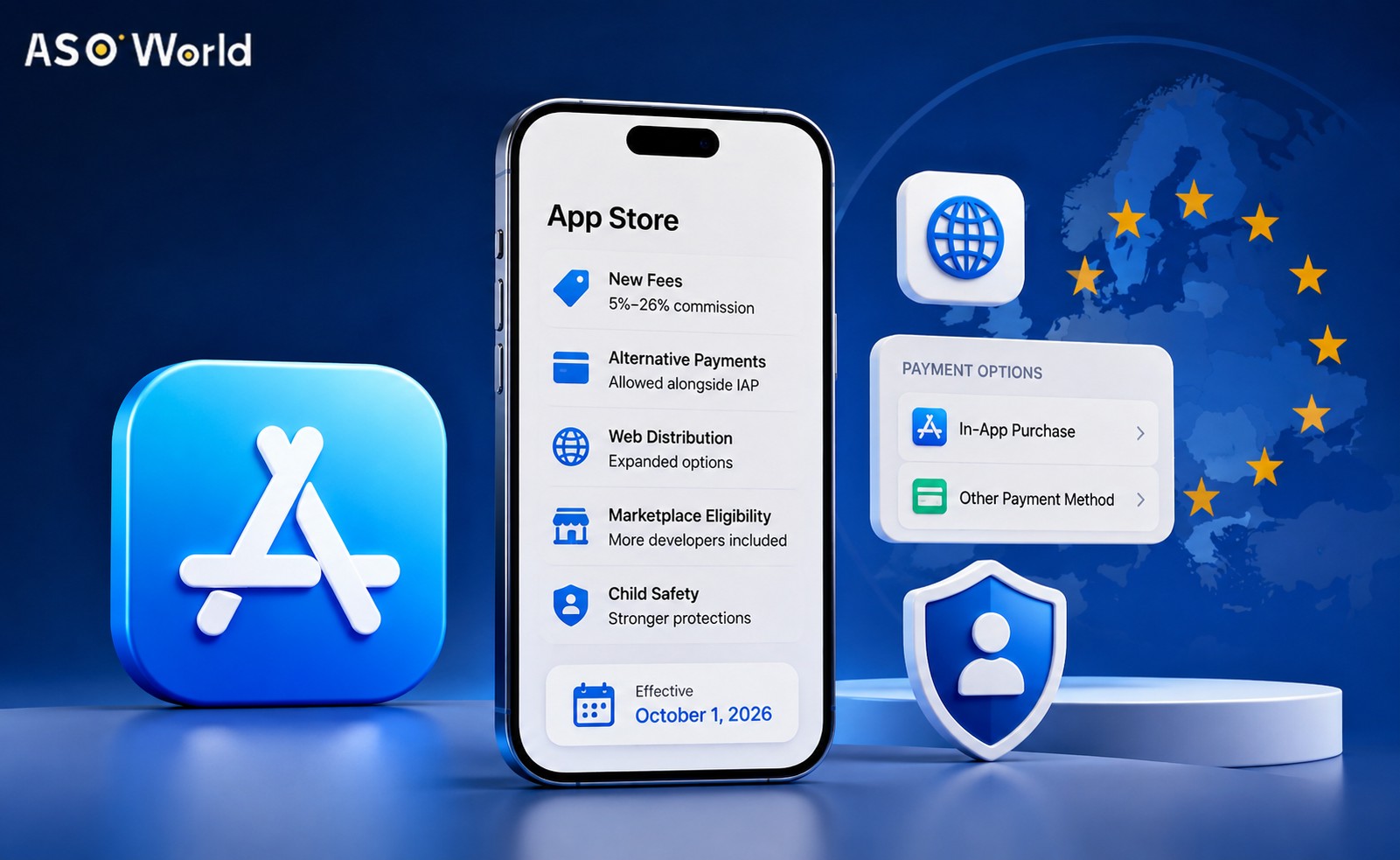
Even as Apple looks to raise margins, regulators and courts around the world are actively cutting into its existing revenue model. In the European Union, the Digital Markets Act (DMA) forced Apple to allow alternative app distribution and external payment processing — with commissions dropping to 20% for alternative payments and as low as 10% under the Small Business Program, plus a Core Technology Fee that has drawn sharp criticism from developers. The European Commission confirmed in August 2026 that Apple's updated fee structure complies with the DMA, effectively locking in those lower rates.
In the United States, a court order now permits developers to direct users to external purchasing options, bypassing Apple's traditional 15–30% commission on some transactions. Apple acknowledged during its July earnings call that these changes were among the factors weighing on Services growth. The result is a classic margin squeeze: Apple is collecting a smaller cut per transaction at the exact moment it wants to grow overall App Store profit.
What Changes Could Be Coming: Search Ads, Subscriptions, and New Monetization Levers
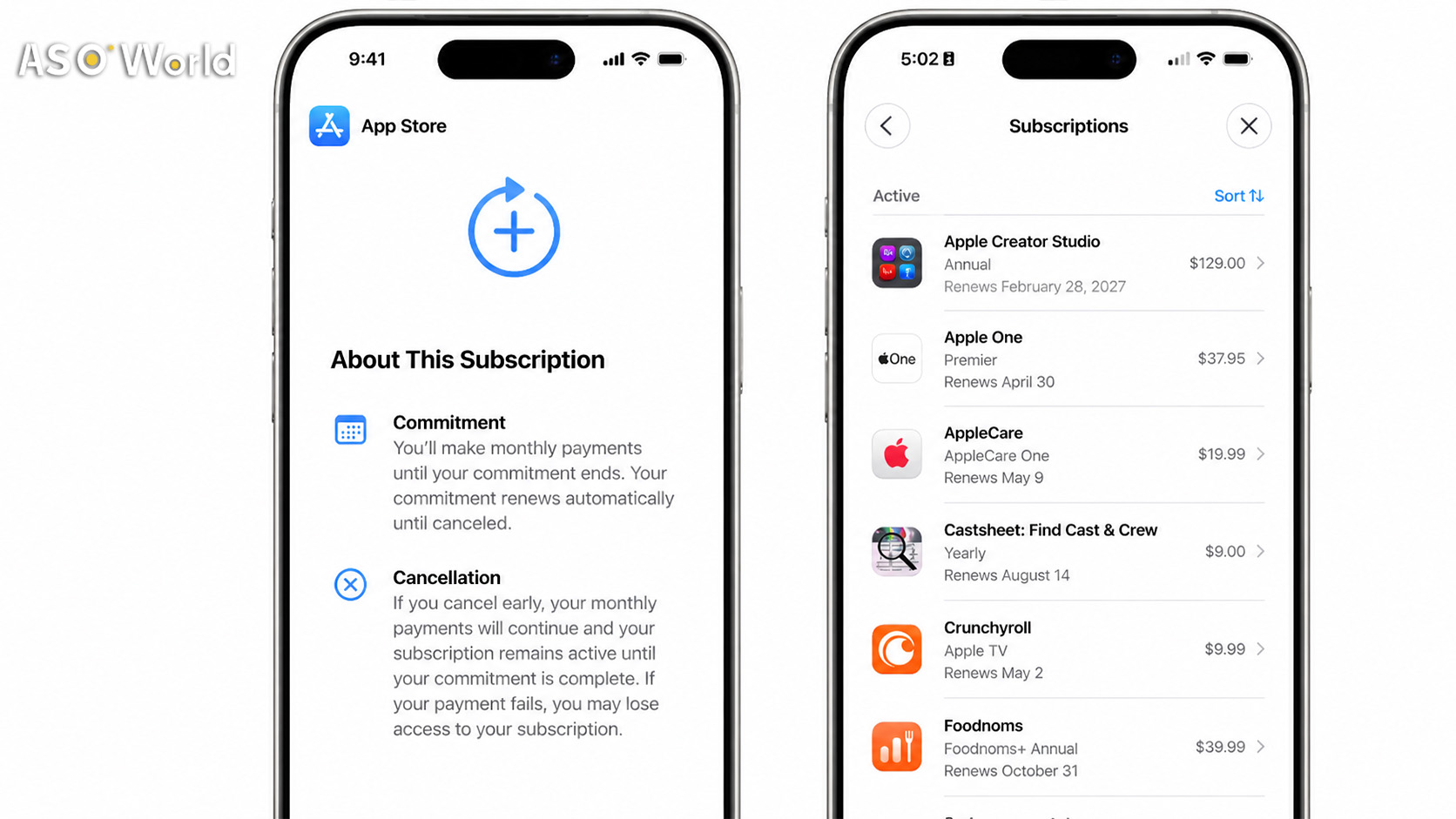
Apple has not disclosed specific plans, but recent moves and industry patterns point to several likely levers. At WWDC 2026, Apple introduced Creative Assets for richer App Store product pages, expanded subscription options including group purchases, and new Custom Product Page deep-linking — all tools that give developers more ways to convert users, and give Apple more touchpoints to monetize. Apple has also confirmed plans to expand Search Ads inventory inside the App Store, opening new paid placements beyond the existing Search tab and search results slots.
Industry analysts expect additional moves in three areas: deeper integration of subscription management tools that nudge free users toward paid tiers, new in-app event and promotional surfaces that developers can pay to feature, and tighter bundling of App Store commerce with Apple's own services — Apple Music, Apple TV+, and iCloud — creating recurring-revenue loops that benefit Apple first.
What Comes Next: The Ternus Era and Developer Relations
Schiller's departure and the organizational restructure are not one-off events — they signal a philosophical shift in how Apple treats its developer ecosystem. Under Schiller, the App Store balanced revenue generation with platform stewardship and developer advocacy. Under the Ternus-Cue axis, the priority is clearer: the App Store is a services business first, and it needs to grow like one.
The risk, as Schiller reportedly recognized, is that pushing too hard on margins could further strain Apple's already tense relationships with developers and regulators. The European Commission's DMA enforcement, the US court-ordered payment flexibility, and parallel investigations in Japan, South Korea, and the UK mean that every new monetization lever Apple pulls will be scrutinized. For developers, the smartest move right now is to treat the App Store as a paid acquisition channel that is becoming more expensive and more sophisticated — and to build ASO and paid UA strategies accordingly, before the next wave of changes arrives.

 Follow Us on Facebook