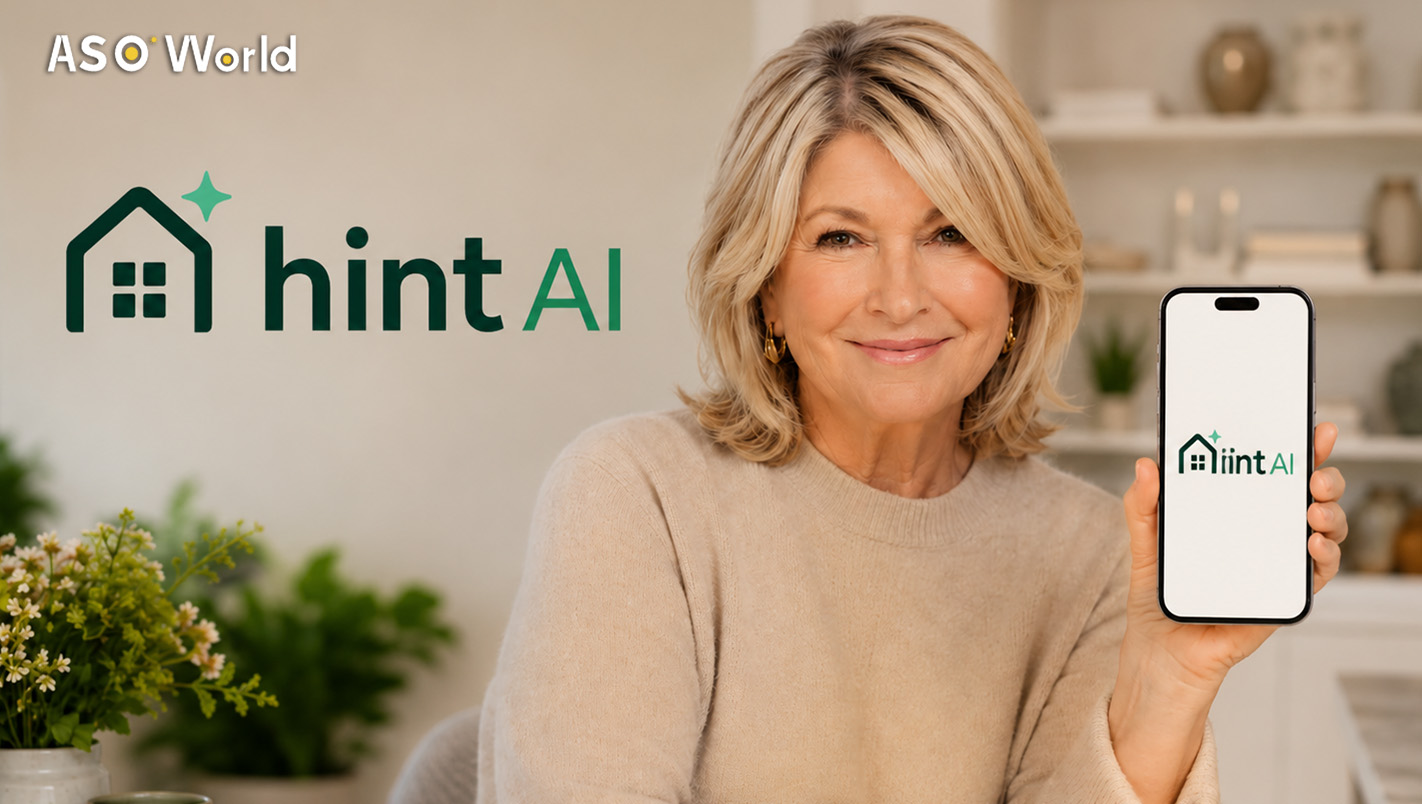

Lifestyle and business icon Martha Stewart has officially entered the artificial intelligence space with her new startup, Hint, an AI-powered home management platform designed to help homeowners anticipate maintenance issues before they turn into costly repairs.
According to Fortune, the startup has raised $10 million in seed funding, led by Slow Ventures, with additional backing from Montauk Capital, Tusk Venture Partners, Amplo, Energy Impact Partners, Hannah Grey, and Brian Kelly.
Hint was co-founded by Stewart alongside home-services executive Yih-Han Ma and AI engineer Kyle Rush, and is expected to launch this summer on desktop and iOS. The platform’s core value proposition is using AI to proactively manage homes, tracking maintenance schedules, utility costs, insurance renewals, environmental conditions, and repair risks.
For developers and product managers, this marks the beginning of the "Vertical AI" era, where the moat is no longer the model itself, but the proprietary, authoritative data that powers it. As traditional search traffic continues to fragment due to AI Overviews, Hint offers a blueprint for building "destination platforms" that bypass the volatility of the Google-to-App-Store pipeline. xplore our global AI app revenue insights for detailed market data.
The Rise of "Authority AI": Why Human Expertise is the New Moat
The AI industry is moving beyond the "novelty" phase, where a chat interface alone was enough to drive retention. Developers now face feature saturation, with every app offering some form of basic AI assistant. Martha Stewart’s Hint addresses this by leaning into Authority AI.
What happened
Hint integrates decades of Stewart’s curated home management expertise with advanced AI to provide precise, actionable instructions rather than probabilistic guesses.
Why it matters
For intermediate and advanced practitioners, this signals a shift in technical KPIs. ROI is no longer just about token efficiency; it’s about Accuracy ROI. In a world where LLMs often hallucinate, a platform backed by a human-in-the-loop expert model builds a defensible moat that generic SaaS tools cannot replicate.
Who is affected
Product managers and developers relying on generic API calls (e.g., GPT-4o) without a proprietary data layer. Competitive advantage is shifting from prompt engineering to data provenance.
Impact on the AI App Market
The home management sector has long been fragmented across calendars, to-do lists, and DIY blogs. Hint demonstrates a broader trend: AI platforms are evolving from simple knowledge-query tools into vertical, integrated ecosystems capable of automating workflows and providing a one-stop user experience.
What happened: Hint is more than a knowledge base—it’s a full management tool, automating household workflows—from grocery scheduling to seasonal maintenance—using Stewart’s methodology.
Future trends: AI platforms are moving toward verticalization and intent-driven design. Users will increasingly go directly to specialized AI tailored to their needs, rather than relying on general search or AI overviews. Each vertical AI platform has the potential to become the “default AI” for its domain, fortified by authoritative data that creates a defensible moat. Read our AI-driven app marketing insights to optimize retention in vertical AI platforms.
Implications for Marketers and Developers
Vertical AI platforms like Hint are reshaping the rules of engagement. Key takeaways:
- Platform integration is critical: Brands not recommended within vertical AI risk near invisibility.
- Trust outweighs search volume: SEO evolves into Entity Trust Optimization—data partnerships, endorsements, and recognized authority matter more than keywords.
- Developer advantage shifts: Competitive edge moves from prompt engineering to authority-driven data and expert knowledge.
- Micro-vertical opportunities: Smaller teams can dominate niches (e.g., sustainable urban gardening) by securing specialized expertise and creating tailored workflows.
- Goal for developers: Become the default AI in a niche, leveraging first-mover advantage and high retention to build a defensible position.
Navigating "Traffic Anxiety" in the Era of Curated AI Destinations
One of the core pain points for today’s SEO and ASO specialists is the "zero-click" reality of AI-integrated search engines. Hint represents the next evolution of this threat: the Destination AI.
What happened: By creating an authoritative destination, Hint draws users away from the open web into a closed, high-retention ecosystem.
Why it matters: This is a solution to "Traffic Anxiety." Rather than fighting for the leftover 20% of Google traffic, developers should consider the Hint model—building a platform so authoritative it becomes the user’s first touchpoint.
Strategic implication: For app developers, the objective is now to become the default AI for a specific niche. Whether it’s home management, legal advice, or medical triage, first-mover advantage belongs to those securing authoritative partnerships early.
Comments
The launch of Hint signals that the AI app market is entering an era of verticalization and authority-driven platforms. For developers, competition will focus less on the scale of generic LLMs and more on exclusive data, expert endorsement, and micro-vertical dominance. For marketers, traditional traffic acquisition strategies are being replaced by platform integration and trust recognition. Those who establish authority early within vertical AI ecosystems will control the next wave of user touchpoints.
FAQ
1. What makes Hint different from using a generic AI like ChatGPT for home advice?
Hint is built on a proprietary dataset of Martha Stewart’s verified expertise, whereas generic LLMs aggregate data from across the internet, including unverified or low-quality sources. This reduces hallucinations and increases the practical utility of the advice for complex home tasks.
2. How does the rise of platforms like Hint affect SEO and digital marketing?
As users migrate to specialized AI platforms for specific intents (like home management), traditional search volume for those queries will likely decrease. Marketers must shift from broad SEO to "LLM Optimization" and seek partnerships within these vertical ecosystems.
3. Can smaller developers compete with celebrity-backed AI platforms?
Yes, by focusing on "Micro-Verticals." While Hint covers general home management, a smaller team can dominate a narrower niche (e.g., "Sustainable Urban Gardening") by securing a specific expert moat and building a more tailored productivity workflow.
4. What is the most important KPI for developers building similar AI tools?
Beyond standard retention, the most critical metric is "Trust Accuracy"—the percentage of AI-generated suggestions that the user successfully completes without needing to verify the information elsewhere. This is what drives long-term platform loyalty in the AI era.

 Follow Us on Facebook