
Apple is days away from the biggest iPhone launch in its history. At its "Surprise and Shine" event on Wednesday, September 9, the company is widely expected to unveil the iPhone Ultra — its first-ever foldable iPhone — alongside the iPhone 18 Pro lineup. If the leaks hold up, it will be the most expensive iPhone ever sold, the thinnest device Apple has ever folded, and the product that finally puts Apple inside the foldable market Samsung has owned for years. Here is everything we know, every rumor worth tracking, and the trade-offs you need to be aware of before September 9, 10 a.m. PT.
What Is the iPhone Ultra?
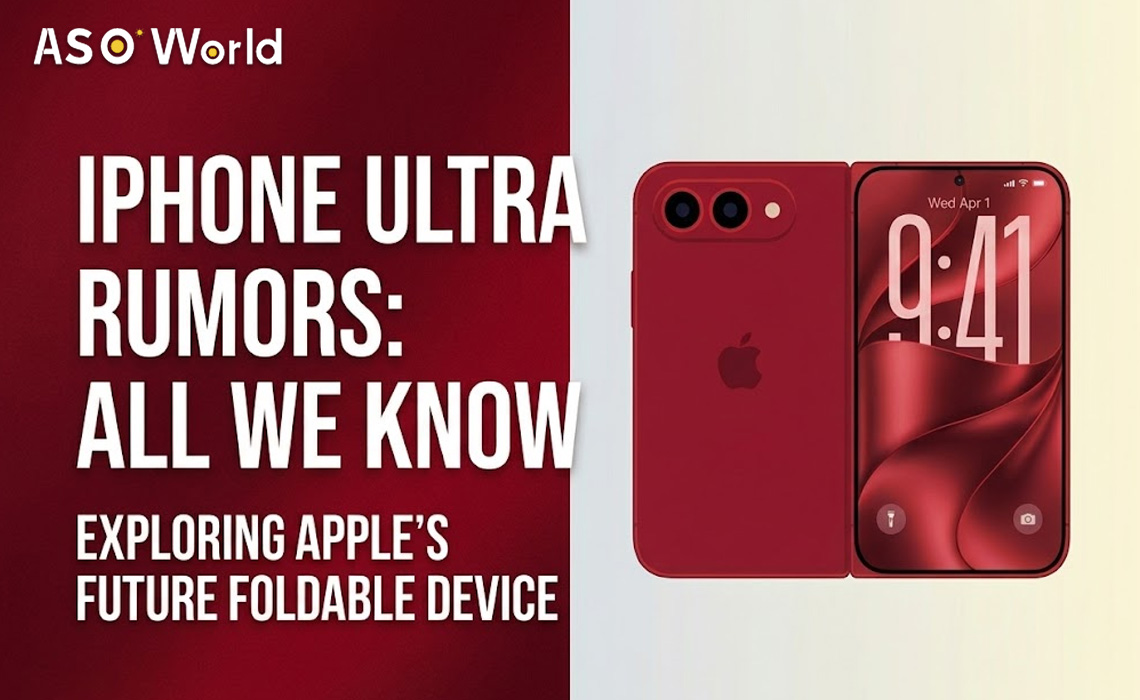
The iPhone Ultra is Apple's answer to the Galaxy Z Fold: a book-style foldable that unfolds from a squat, passport-shaped design into a large tablet-like display. Leaked CAD renders and early unboxing videos point to a wider, squatter silhouette closer to the original Google Pixel Fold or the Galaxy Z Fold 8 than to tall, narrow foldables. The rumored display setup pairs a 7.8-inch inner screen with a 5.5-inch cover display, and the device is said to measure just 4.5–4.8mm when unfolded — among the thinnest iPhones ever made — and around 9.5mm folded.
That thinness comes with a signature design decision: there is reportedly no room for the TrueDepth camera array, so the iPhone Ultra is expected to drop Face ID in favor of a Touch ID side button, with volume buttons relocated to the top edge. The crease, the reason Apple is said to have delayed this product for years, is rumored to be dramatically minimized — TrendForce reports point to an advanced adhesive breakthrough — though Bloomberg's Mark Gurman has been more measured, noting the crease is minimal but not invisible. A liquid-metal hinge has also been floated by leaker Fixed Focus Digital, and Gurman says all signs point to MagSafe charging support despite early dummy units lacking the ring. Expect just two colorways at launch: silver/white and dark blue.
Leaked Specs at a Glance
| Component | iPhone Ultra (Rumor) |
|---|---|
| Form factor | Book-style foldable, squat "passport" silhouette |
| Displays | 7.8-inch inner (crease-minimized) + 5.5-inch cover |
| Thickness | 4.5–4.8mm unfolded; ~9.5mm folded |
| Chip | A20 Pro (2nm, same as iPhone 18 Pro) |
| Modem | Apple C2 — or Qualcomm in the U.S. if C2 lacks mmWave |
| RAM | 12GB |
| Battery | ~4,883mAh (latest leak; earlier talk of up to 5,500mAh) |
| Cameras | Dual 48MP rear (Wide + Ultra Wide); dual 24MP selfies (cover + inner) |
| Security | Touch ID side button (no Face ID) |
| Colors | Silver/white and dark blue |
| Price | $2,000–$2,500 depending on storage |
Cameras and Performance: The Hidden Trade-Offs
Inside, the iPhone Ultra is expected to share the A20 Pro chip with the iPhone 18 Pro, giving it flagship-class performance. But the modem story is more complicated: Apple was expected to complete its Qualcomm divorce with the in-house C2 modem, yet the latest signals suggest U.S. models could still ship with Qualcomm if the C2 doesn't support mmWave 5G. Gurman describes it as hinging entirely on that one radio capability.
On the camera side, Apple is reportedly making a deliberate compromise. The Ultra is expected to carry two horizontally arranged 48MP rear cameras (Wide and Ultra Wide) and two 24MP selfie cameras — one on each display — but no telephoto zoom, a capability the iPhone 18 Pro Max is rumored to extend to 6x alongside a new variable-aperture main lens. In other words, Apple's foldable buys you screen real estate, not camera bragging rights. Seven years of iOS camera engineering will still be there, but buyers cross-shopping the Ultra against the Pro Max should know what they're giving up.
Price, Supply, and the DRAM Problem
Analyst Ming-Chi Kuo has pegged the iPhone Ultra at $2,000 to $2,500, and early adopter demand is expected to be brutal — for the wrong reasons. Semiconductor analyst Tim Culpan reports Apple is scrambling for DRAM, with $1 billion of unpackaged TSMC processors sitting idle waiting on memory chips, fueling fears of an initial sellout at pre-order. Leaker Fixed Focus Digital says the first production run is around 10 million units, with a ramp-up expected to take three to five months — 30–40% slower than iPhone 17 production, which hit 5 million units per month. Early availability could be "extremely limited," and Gurman himself says he would be "very surprised" if the Ultra doesn't launch alongside the iPhone 18 Pro — but long wait times are likely for anyone who doesn't pre-order immediately. Pre-orders, unusually, may open on Saturday, September 12, one day after the customary Friday slot.
The Market Impact: Apple Enters a Category It Once Ignored
Apple's entry changes the economics of the entire foldable market. DigiTimes, citing industry sources, expects global foldable shipments to grow 20% in 2026, with the iPhone Ultra cited as a primary driver; IDC modeling from April similarly predicted a 19% sales jump and roughly 24% global share for Apple if its foldable shipped this year. That would make Apple the second-largest foldable vendor almost overnight — remarkable for a company that has never sold one of these devices.
| Device | Main Display | Price Range | Distinctive Feature |
|---|---|---|---|
| iPhone Ultra (rumored) | 7.8" foldable | $2,000–$2,500 | Near-crease-free display, 4.5mm thin |
| Samsung Galaxy Z Fold 8 | 7.8" foldable | ~$1,999 | Mature ecosystem, S Pen support |
| Pixel 10 Pro Fold | 8" foldable | ~$1,899 | Best-in-class AI camera software |
| Galaxy Z Flip 7 (clamshell) | ~6.7" foldable | ~$1,099 | Compact pocket form factor |
Consumer sentiment is split: in a CNET survey, 64% said they don't want a foldable phone at all — but interest could shift quickly once Apple's ecosystem and app library are on the table. Notably, Samsung has already been courting iPhone owners with a two-iPhone side-by-side app that simulates a Galaxy Fold experience. The pressure is on.
What This Means for App Developers
Foldables test every assumption of mobile design — and the iPhone Ultra arrives with a software mandate attached. iOS 27 reportedly includes a major push for app resizability and flexible layouts: sidebars, side-by-side multitasking, and adaptive breakpoints are all expected to be first-class on the foldable's 7.8-inch canvas. Developers who ship rigid, iPhone-6-era layouts will watch their screenshots get buried in a new premium App Store tier, while adaptive apps win the spotlight with better visibility and conversion.
What Comes Next
Mark your calendar: Wednesday, September 9 at 10 a.m. PT / 1 p.m. ET / 6 p.m. BST. The "Surprise and Shine" event — the first hosted by new CEO John Ternus, who takes over from the retiring Tim Cook — streams live on Apple's website, the Apple TV app, and YouTube. Alongside the Ultra, expect the iPhone 18 Pro and Pro Max, Apple Watch 12 and Ultra 4, AirPods 5, and a long-overdue Apple TV 4K; the base iPhone 18 is reportedly delayed until early 2027 to focus demand on the Pros.
Will the iPhone Ultra actually launch on September 9, or will supply constraints push it into delay like so many foldables before it? Either way, Apple's first foldable is the industry's most consequential product launch of the year — and we'll bring you the full breakdown the moment it hits the stage.

 Follow Us on Facebook