
Chinese AI start-up Monica has made headlines with the release of Manus, an artificial intelligence (AI) agent that has sparked significant public and media interest. The AI assistant gained attention within 20 hours of its preview launch, with many calling it a potential breakthrough in general AI technology.
Discussion around Manus has trended online, with comparisons to other major advancements in China’s AI landscape.
What Makes Manus Different?
A New Era of AI Autonomy
Manus is being described as the world’s first truly general AI agent. Unlike conventional AI assistants, which primarily process information upon request, Manus is capable of independently thinking, planning, and executing complex tasks. The AI agent aims to bridge the gap between human reasoning and action, marking a significant step toward the realization of more autonomous AI systems.
According to the company’s website, Manus can handle a range of practical applications, from planning travel guides to conducting in-depth financial analyses, such as studying Tesla’s stock trends. Reports suggest that Manus outperforms existing models, including OpenAI’s latest offerings, in benchmark tests designed to assess real-world problem-solving abilities.
Public Enthusiasm and Invitation Code Frenzy
High Demand, Limited Access
Since its launch, accessing Manus has proven to be a challenge. Currently, users need an invitation code, leading to skyrocketing demand. On secondhand marketplace platforms, invitation codes are being sold for prices ranging from 999 yuan (≈$137) to as much as 50,000 yuan (≈$6,900). Some sellers have refused to negotiate, citing the extreme scarcity of the codes.
Zhang Tao, a partner at Manus AI, explained that the invitation-only model was necessary due to limited server capacity. He assured the public that the company is actively working to scale access.
Young Entrepreneurial Talent Behind Manus
Emerging Leaders in China’s AI Industry
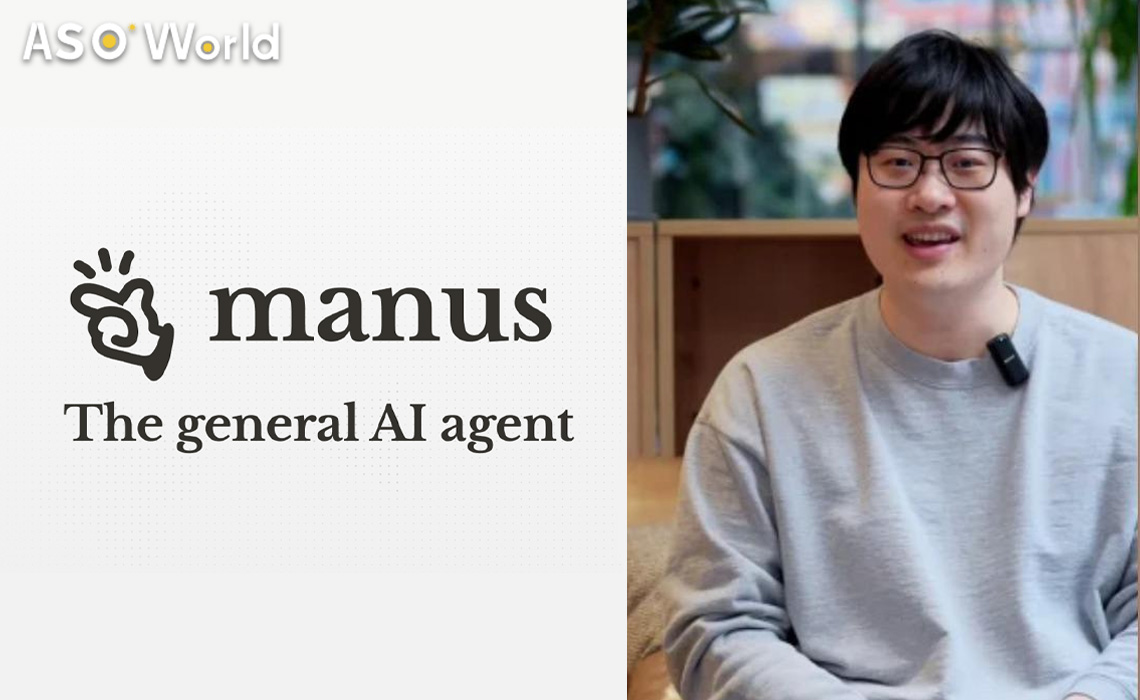
The founding team of Monica includes Xiao Hong, a serial entrepreneur and a 2015 graduate of Huazhong University of Science and Technology. Discussions about him and the company have trended on Weibo, with topics like “Manus’ founder being a post-90s Chinese entrepreneur” drawing over 27.8 million reads and thousands of comments.
Ji Yichao, a co-founder of Manus AI, emphasized in an announcement that their goal is to push AI beyond chatbots and workflow systems. He called Manus a step toward “the next paradigm of human-machine collaboration” and even hinted at its potential role in the future development of Artificial General Intelligence (AGI).
Editor’s Comments
Manus represents a bold step in China’s AI innovation race, demonstrating the country’s growing influence in artificial intelligence. Its rapid popularity highlights the strong demand for autonomous AI systems capable of more than simple interactions. However, challenges such as limited server capability and high entry barriers may slow down widespread adoption.
This launch is reminiscent of recent breakthroughs such as DeepSeek’s rise in the AI industry. As companies like Monica push the boundaries of AI-assisted automation, it raises larger questions about the ethical and practical implications of AI autonomy. Will Manus lead to a shift in AI’s role in everyday life, or will adoption challenges hinder its success? The coming months will be crucial in determining whether this AI agent marks a new era or merely a temporary sensation.

 Follow Us on Facebook