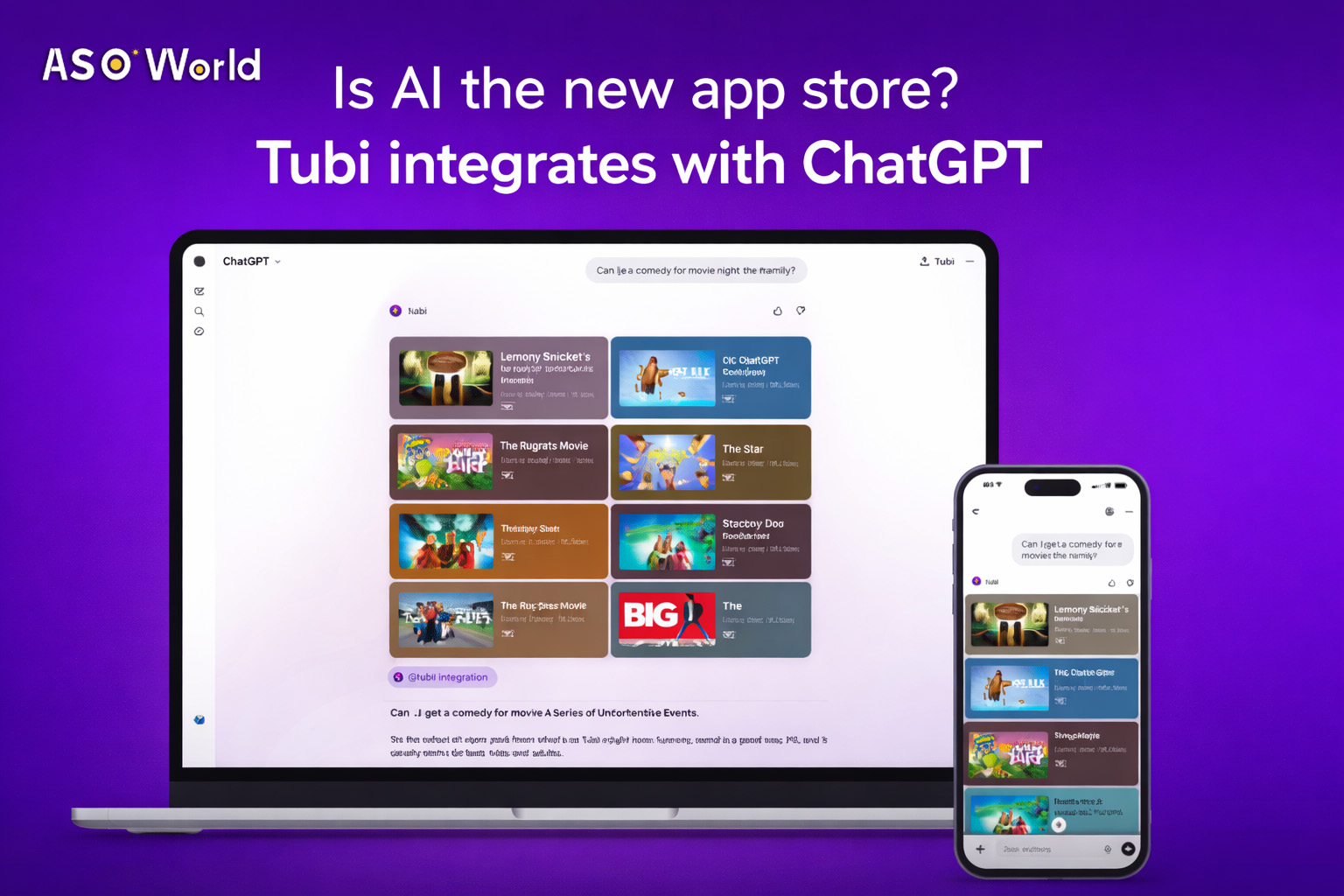

Tubi has become the first streaming platform to launch a native app within ChatGPT, marking a new step in the evolution of app distribution. Instead of relying solely on traditional app stores or in-app browsing, users can now discover content through natural language conversations, signaling a potential shift toward AI-powered entry points.
AI Interfaces Are Emerging as New Discovery Gateways
From Search Keywords to Natural Language Intent
Traditionally, app discovery has relied heavily on keyword searches in platforms like app stores. With ChatGPT integration, users can describe what they want in conversational language, such as requesting a specific mood or genre. The system then interprets intent and delivers curated results.
This shift suggests that discovery is moving away from rigid keyword matching toward contextual understanding, where AI models act as intermediaries between users and applications.
How Tubi’s ChatGPT Integration Works
Seamless Content Discovery Within Conversations
After adding the Tubi app inside ChatGPT, users can invoke it using prompts like “a thriller for tonight” or “a surreal but non-horror movie.” The AI then returns tailored recommendations sourced from Tubi’s library of over 300,000 titles.
The integration allows users to move from intent to content without navigating multiple interfaces, reducing friction in the discovery process.
Expanding Ecosystem with Mixed Developer Feedback
Growth Opportunities and Platform Challenges
Tubi joins a growing list of over 300 apps integrated into ChatGPT, including platforms such as Spotify, Canva, and Booking.com.
However, the ecosystem is still evolving. Some developers have raised concerns about limited functionality, slow approval processes, and restricted access to user data. These challenges highlight the trade-offs between gaining early access to AI-driven distribution and maintaining control over user relationships.
Strategic Implications for App Distribution
Capturing User Intent Earlier in the Journey
Tubi’s move reflects a broader strategy to engage users at the earliest stage—when they first express intent. By positioning itself within a conversational interface, the platform reduces reliance on users opening standalone apps.
This approach builds on Tubi’s prior investments in AI-driven personalization, leveraging large-scale viewing data to improve recommendation accuracy and user engagement.
Comments
The integration of apps like Tubi into ChatGPT indicates a broader transition in how digital services are discovered and consumed. While app stores remain critical, AI interfaces may increasingly serve as the first touchpoint for user intent. For developers, this introduces both opportunities—such as new traffic channels—and risks, including reduced visibility and dependence on platform ecosystems. Adapting to this shift may require rethinking discoverability strategies beyond traditional keyword optimization.
👉 Learn more about AI-driven app discovery
FAQ
1. Will ChatGPT replace the App Store as the main distribution channel?
Not in the short term. However, it is becoming a “pre-discovery layer,” where users express intent first and are then guided to apps, creating a dual-entry model: AI + App Store.
2. Should developers integrate their apps into the ChatGPT ecosystem now?
It depends on the app category. Content, utility, and service-based apps are better suited for early adoption, as they rely heavily on intent matching and can benefit more from AI-driven recommendations.
3. How should ASO strategies evolve in an AI-driven discovery model?
ASO needs to shift from keyword ranking to semantic optimization, including:
- Writing descriptions that match natural language queries
- Expanding long-tail, intent-based keywords (scenarios, emotions, use cases)
- Structuring content so it is easier for AI models to interpret
4. Does integrating with ChatGPT affect user data and ownership?
Yes, potentially. Current limitations in data access mean developers may have less visibility into user behavior. It’s important to balance new traffic opportunities with maintaining control over user relationships through diversified acquisition channels.

 Follow Us on Facebook