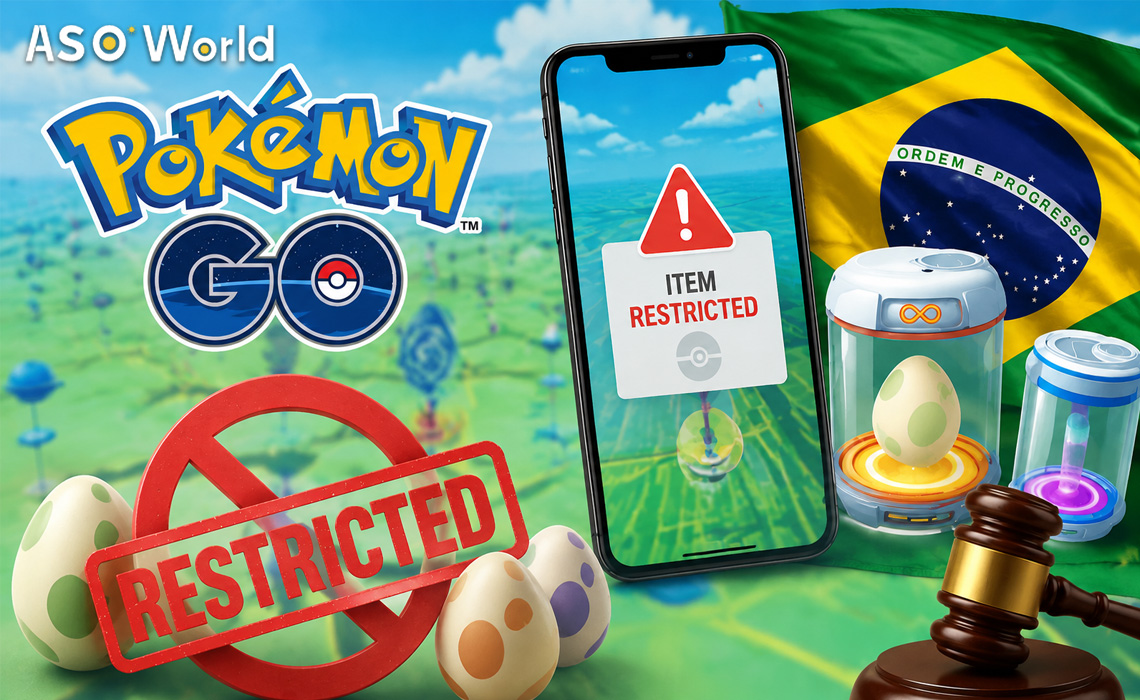

Pokémon GO players in Brazil are reportedly seeing restrictions on Egg Incubators, select shop bundles, and some paid items, following renewed scrutiny of loot box-style mechanics in the country. The reports have quickly turned a regional compliance issue into a wider warning for mobile game developers and app marketers: randomized reward systems are no longer just a monetization design choice. They can directly affect store availability, live-ops calendars, campaign messaging, and user acquisition performance.
The core issue is the Egg and Incubator loop. Players do not directly buy a specific Pokémon, but paid Incubators allow them to hatch more Eggs faster, while the final reward remains randomized. For regulators, that indirect structure may still resemble a loot box when real-money spending accelerates access to uncertain outcomes, especially if minors can participate.
Brazil’s Loot Box Crackdown Is Becoming a Global Signal
The timing matters. Brazil has been moving toward stronger youth protection rules for online games and digital services. In September 2025, PocketGamer.biz reported that Brazil had signed into law a ban on selling loot boxes to under-18s, with the measure scheduled to take effect in March 2026.
Separately, legal commentary from Licks Attorneys described a June 2026 court decision ordering major game companies and app store operators to pay collective damages over loot boxes made available to minors. The same analysis highlighted required safeguards including clear warnings, probability disclosure, robust age verification, and refund mechanisms for purchases made by underage users without consent.
For developers, the Brazil case is important because it does not only target games that sell obvious “chests” or “packs.” The wider discussion may also include indirect randomized systems, event bundles, paid accelerators, gacha-style mechanics, and reward loops where the user pays for a chance-driven outcome.
Why This Matters for App Growth Teams
For mobile game marketers, the immediate concern is not only legal exposure. It is operational volatility. If a paid item, event bundle, or reward mechanic is restricted in one market, the impact can spread across ASO, paid acquisition, lifecycle messaging, and revenue forecasting.
- ASO assets may need regional changes: screenshots, preview videos, and descriptions that emphasize rare rewards or chance-based progression could require more careful localization.
- Campaign messaging may need review: ad copy built around “limited-time rewards,” “rare drops,” or “exclusive hatches” can become sensitive if the reward path involves payment and randomness.
- Live-ops calendars may be disrupted: seasonal events that rely on paid accelerators or randomized rewards may need fallback offers in regulated markets.
- User segmentation becomes more important: age verification, parental controls, and region-based shop configuration are moving from compliance features to growth infrastructure.
The Pokémon GO situation also shows why developers should avoid treating compliance as a final pre-launch checklist. For long-running mobile games, monetization systems evolve through events, bundles, subscriptions, passes, and seasonal reward tracks. Each update can change how regulators, platforms, or consumers interpret the product.
A Small but Important App Store Policy Reminder
App store rules already require attention to randomized virtual items. Apple’s App Store Review Guidelines state that apps offering loot boxes or other mechanisms with randomized virtual items for purchase must disclose the odds of receiving each item before purchase. Google Play’s Payments policy similarly requires apps and games offering randomized virtual items from a purchase to clearly disclose the odds in advance.
These platform policies do not automatically solve local regulatory issues. Developers still need to monitor country-level rules, especially where minors, gambling-like mechanics, paid randomness, and age verification overlap.
The Bigger Trend: Monetization Design Is Becoming a Market Access Issue
The reported Pokémon GO restrictions are not just a one-game controversy. They point to a broader shift in mobile gaming: monetization design can now determine whether a feature is available, how it can be promoted, and which users can access it.
For developers and marketers, the practical response is to design more flexible monetization systems. Games with region-specific shop controls, transparent probability displays, deterministic reward alternatives, and age-aware purchase flows will be better positioned when regulations change.
That flexibility also supports growth. A game that can quickly replace a randomized paid offer with a compliant fixed-value bundle can protect revenue while keeping campaigns live. A marketing team that understands which creatives mention chance-based rewards can update app store pages and ad sets before restrictions affect conversion rates.
Pokémon GO’s Brazil situation remains based on player reports, and the final implementation may change as the operator responds. But the lesson for the mobile gaming market is already clear: loot box regulation is moving from legal debate to live product reality. Developers that connect compliance, monetization, ASO, and regional marketing early will have a stronger advantage as more countries revisit how games sell randomized rewards.

 Follow Us on VK