
As attention turns toward WWDC 2026, early reports about iOS 27 suggest Apple is preparing much more than another round of Apple Intelligence features. While many headlines focus on Siri's long-awaited transformation, the broader story may be how Apple is gradually bringing more everyday tasks directly into the operating system.
Several of the most anticipated iOS 27 features share a common theme: reducing reliance on separate apps and making common workflows feel native to the iPhone experience. From nutrition tracking to note-taking and video accessibility, Apple appears to be extending its reach into areas traditionally dominated by third-party services.
1. Siri May Finally Become the AI Assistant Users Expected
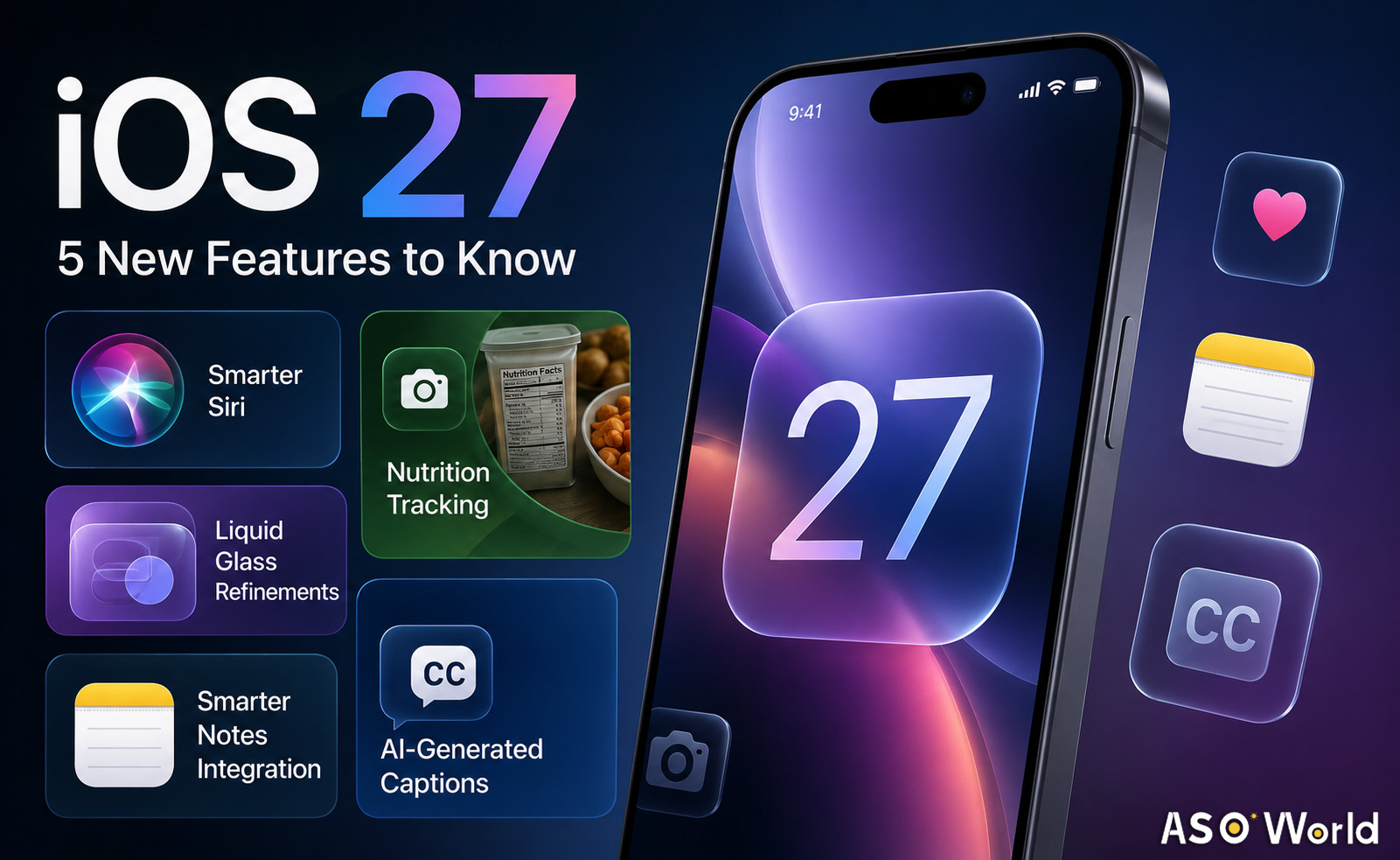
The biggest rumored addition in iOS 27 is a complete rethinking of Siri. According to reports, Apple is developing a dedicated Siri application that would move beyond the traditional voice assistant model. Expected improvements include support for conversational interactions, deeper personal context awareness, on-screen understanding, and the ability to execute multi-step actions across apps. For a deeper look at the rumored redesign, see our analysis of iOS 27's new Siri app and AI overhaul.
This shift reflects a major change in user expectations. AI assistants are no longer judged against older voice assistants such as Siri or Google Assistant. Instead, users increasingly compare them to ChatGPT, Gemini, and other AI systems capable of understanding context and carrying out complex requests. If Apple delivers these features, Siri could become one of the most significant upgrades in iPhone history.
2. Nutrition Tracking Could Move Directly Into the Health App
Another notable rumor involves Apple's Health app. Reports suggest iOS 27 could introduce nutrition label scanning, allowing users to capture food packaging information with their iPhone camera and automatically import nutritional data into Health.
While the feature sounds relatively simple, it addresses a common frustration for users who currently rely on third-party nutrition and calorie-tracking apps. By integrating food tracking more deeply into Health, Apple could make wellness management significantly more convenient while strengthening its health ecosystem. The move also aligns with Apple's long-term strategy of positioning the iPhone as a central hub for personal health data.
3. Apple May Already Be Refining Liquid Glass
Apple's Liquid Glass design language was one of the most discussed visual changes introduced in recent years. While many users appreciated the modern appearance, others raised concerns about readability and usability. Reports indicate iOS 27 could introduce adjustments designed to address those concerns.
Potential changes include expanded customization controls and refinements to interface elements such as the shrinking tab bar behavior found in apps like Music and Podcasts. Although these updates may appear minor, they suggest Apple is actively responding to user feedback rather than waiting several generations to refine the design. For users who found some aspects of Liquid Glass distracting, these refinements could be among the most welcome changes in iOS 27.
4. Notes Could Become More Important to Apple's AI Strategy
One of the less-publicized rumors involves a smarter integration between Siri and Apple Notes. Rather than simply creating new notes, Siri may gain the ability to save, organize, and retrieve information from existing notes more intelligently. This would allow users to capture ideas, reminders, and research through natural language interactions while keeping information organized inside Apple's ecosystem.
The feature may seem small compared with a redesigned Siri, but it points to a larger trend. As AI assistants become more personalized, they require a place to store and reference user information. Apple Notes could become a key component of that experience.
5. AI-Generated Captions Could Improve Every Video
Accessibility may be one of the biggest beneficiaries of Apple Intelligence in iOS 27. Apple is reportedly working on automatic caption generation for videos that do not already include subtitles. The feature could apply to videos recorded on iPhone, shared through Messages, or viewed online.
Unlike many AI features that target specific user groups, generated captions have broad appeal. They make videos easier to watch in noisy environments, improve accessibility, and help users consume content without audio. Because the feature works behind the scenes, it also reflects Apple's growing emphasis on practical AI experiences rather than highly visible AI branding.
What This Means for Developers and Marketers
iOS 27's rumored features highlight a broader trend: Apple is bringing more everyday tasks directly into the operating system. From AI assistance and nutrition tracking to note management and accessibility tools, capabilities that once required separate apps are increasingly becoming native experiences.
For developers, that means competing on unique workflows and specialized value rather than basic features alone. For marketers and ASO teams, it reinforces the growing importance of discovery and positioning. As more apps compete for attention—and Apple expands its own built-in offerings—standing out may become just as important as building the product itself.

 Follow Us on Facebook