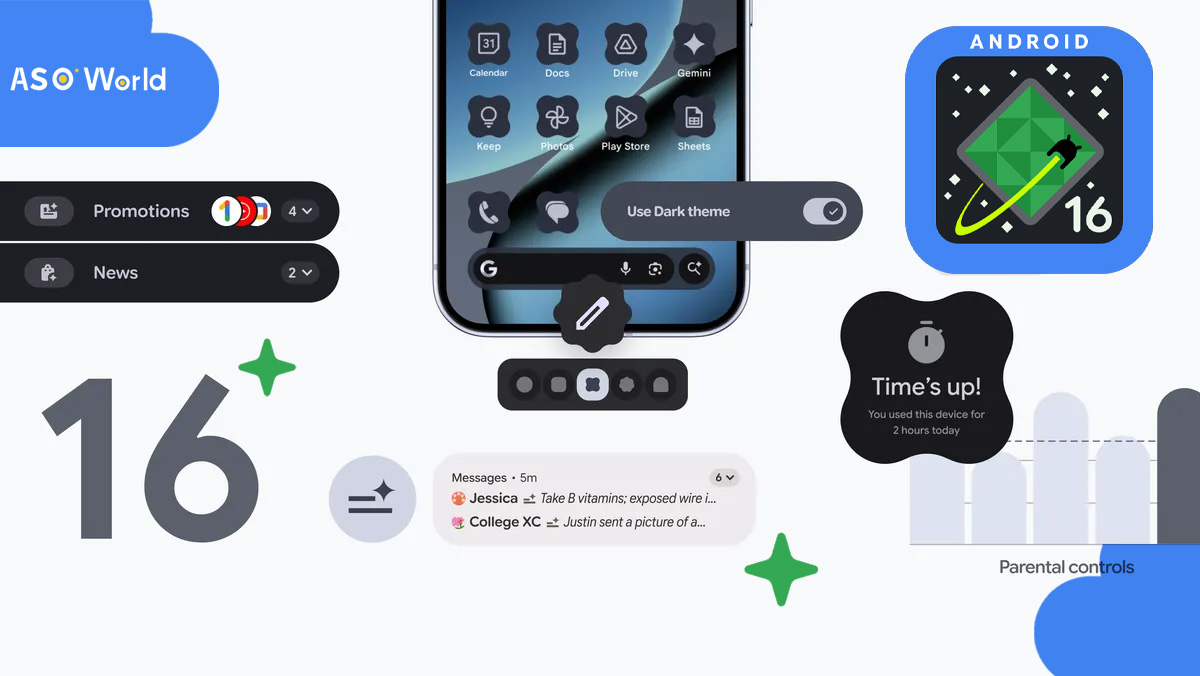

Android 16 is now rolling out with a redesigned update strategy and a suite of AI-driven features aimed at reducing notification clutter, improving communication, and tightening security.
The release begins with Pixel devices and will gradually expand to partner manufacturers as Google shifts from annual upgrades to a more frequent, modular update model.
AI Enhancements Arrive Across Notifications and Messaging
Smarter notification summaries
Android 16 introduces AI Notification Summaries that condense long messages and active group threads into short, glanceable highlights.
The system's new Notification Organizer automatically groups and silences lower-priority alerts to reduce interruptions throughout the day.
Enhanced communication tools
New caption features add emotional context to livestreams and video content, improving clarity when audio is unavailable.
System-level writing support offers refined grammar checks, tone adjustments, and smarter reply suggestions through the keyboard.
Scam protection for calls and messages
AI is used to detect suspicious messages, links, and call patterns.
Android 16 warns users when potential fraud attempts appear, strengthening defenses against phishing and impersonation attacks.
Interface Updates and Personalization Options
More control over appearance
The update expands customization with adaptive themes, redesigned icons, and forced dark mode support for apps without native dark themes.
Lock-screen Live Updates provide ongoing information for services such as rideshare trips or delivery tracking.
Improved device management
Parental controls are now directly integrated into Settings, offering easier access to screen time limits, usage monitoring, and app restrictions.
Rollout Strategy and Device Availability
Pixel devices receive features first
Android 16's initial release began in June 2025, followed by incremental feature drops such as the QPR2 update in December.
Pixel devices are the first to access the new AI capabilities, with OEM partners integrating the update on their own schedules.
Shift to a continual update model
Google is moving away from yearly major releases and toward more frequent system updates delivered when features are ready.
This model is designed to accelerate feature adoption, keep security patches timely, and reduce fragmentation across the Android ecosystem.
Implications for Users and Developers
Stronger security and simpler daily use
AI-assisted protection, streamlined notifications, and clearer communication tools create a more predictable and safer mobile experience.
The blend of personalization and automated organization reflects a broader shift toward context-aware design.
Developer impact
Faster OS iterations encourage developers to adapt app interfaces and notification handling more quickly.
The expanded use of on-device AI may push more apps to integrate system-level APIs for summaries, captions, and content generation.
Editor's Comments
Android 16 marks one of Google's most significant structural shifts in recent years.
The combination of system-wide AI assistance, a more flexible update pipeline, and stronger fraud detection reflects ongoing efforts to modernize Android’s core experience.
As AI becomes more embedded at the OS level, competition across mobile platforms is expected to intensify.
The new update strategy may reduce fragmentation if major OEM partners adopt the model consistently.
Future releases are likely to deepen on-device AI processing and expand safety protections as threats evolve.

 Follow Us on Facebook