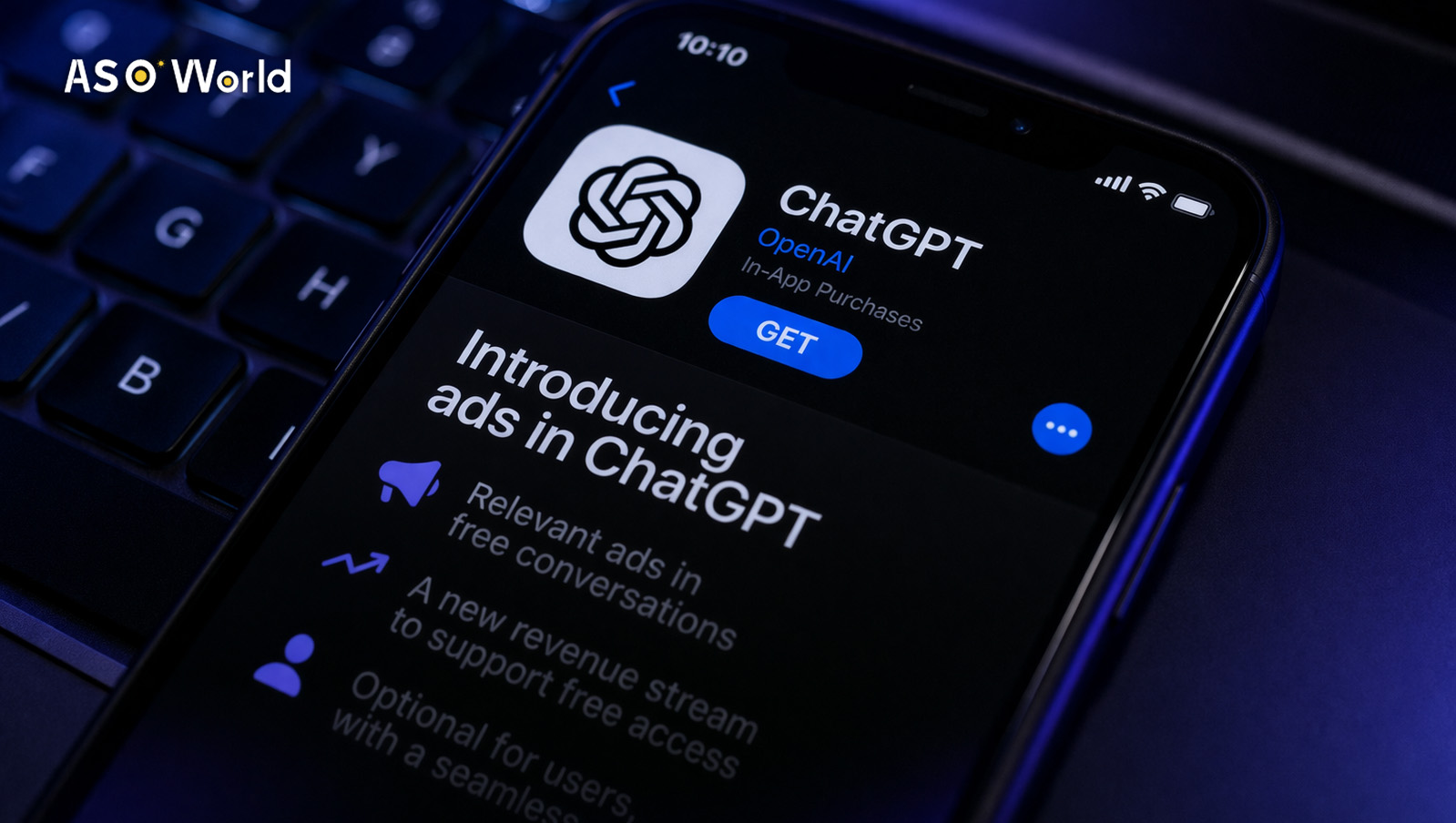

In March 2026, OpenAI revealed it will begin showing ads to users of ChatGPT’s free and low-cost “Go” tiers in the United States. This marks a new funding approach for the AI assistant: by monetizing its large base of free users, OpenAI aims to offset soaring infrastructure costs and broaden access to its technology. During tests, ads will appear within chat conversations as clearly labeled sponsored suggestions at the end of relevant responses. Importantly, higher-tier subscribers (Pro, Business, Enterprise) will continue to enjoy an ad-free experience.
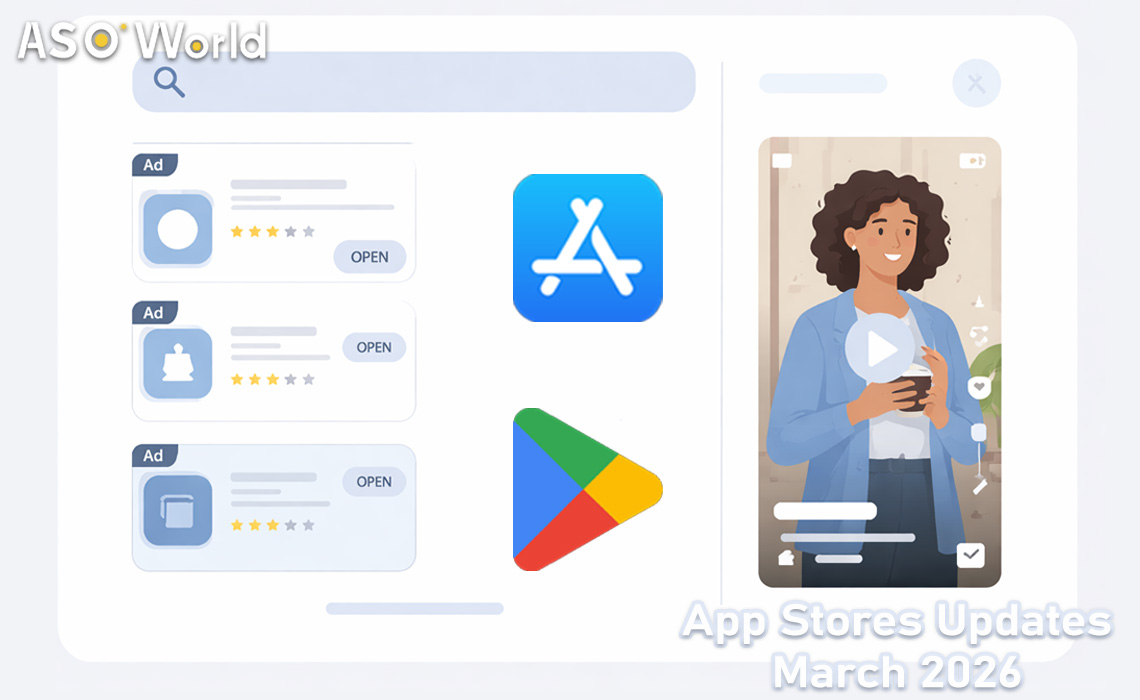
👉 To view App Stores March 2026 Updates, and join us with topics:
- What changed in the App Store search results
- How Google Play short-form video is altering discovery
- Why visibility is shifting upstream and sideways
- What ASO teams must prioritize in 2026
Expanding Access with Ads
OpenAI’s move follows its recent push to make ChatGPT widely available. Last year the company launched “ChatGPT Go,” a low-cost $8/month subscription in 171 countries, and has now extended those benefits (file uploads, memory, etc.) to U.S. users. The new ad initiative is intended to further expand free access by subsidizing costs: OpenAI noted it wants “more people [to] benefit from our tools with fewer usage limits or without having to pay”. In practice, that means the free and Go tiers will help fund the service through advertising, even as paid tiers remain unaffected.
Monetization Meets Growth
Reports indicate that OpenAI is under pressure to diversify revenue. Usage of ChatGPT has surged, driving up compute and infrastructure expenses. Reuters notes OpenAI “has been exploring advertising as a new revenue stream” and is “seeking to diversify revenue” amid rising costs and stiff competition in AI.
By charging advertisers rather than free users, OpenAI can spread the cost of providing a free service. The company has already partnered with ad-tech firms like Criteo to pilot targeted ads in ChatGPT, and has advised advertisers on best practices for reaching its audience. In effect, free users become a monetizable asset — similar to how other tech services balance free access and revenue — which helps fund further expansion.
Ad Rollout and User Experience
OpenAI emphasizes that advertising will be carefully controlled to protect user trust. Ads will be displayed at the bottom of chat answers, clearly labeled as sponsored content and kept separate from the AI’s responses. The company’s blog stresses “answer independence” – ads “do not influence the answers ChatGPT gives you” – and that the assistant will always optimize answers based on user needs, not ad objectives. Users’ conversations remain private from advertisers and are never sold, and underage users (under 18) will not see any ads during the initial tests.
OpenAI also plans to allow users to dismiss ads or opt out of personalization if desired. As COO Brad Lightcap explained, introducing ads will be “an iterative process” focused on maintaining a “delightful product experience,” noting that “ads done right can be additive to a product experience”.
Industry Implications
ChatGPT’s ad rollout underscores a larger trend: AI tools are now monetizing user growth in familiar ways. Many digital platforms (streaming, social media, etc.) already use hybrid models combining free, ad-supported tiers with premium subscriptions. OpenAI’s strategy signals that AI assistants must likewise balance rapid user acquisition with sustainable revenue.
For developers and product teams, this shift highlights the importance of flexible business models. Relying solely on subscriptions may not suffice as usage scales, and introducing ads can provide a new growth lever. The key lesson is to integrate advertising without undermining the core experience. In ChatGPT’s case, OpenAI is prioritizing trust and relevance: only non-intrusive, clearly-marked ads will appear, and there will always be an ad-free paid alternative. Other AI apps may observe this model and consider when it makes sense to monetize heavy users through ads while preserving user satisfaction.
Comments
OpenAI’s decision to put ads in ChatGPT is less about advertising itself and more about timing. With costs rising and competition fierce, the company is shifting to a “scale now, monetize later” approach common in tech. For users of free AI tools, this serves as a reminder that platforms need viable business models. The crucial question is whether such ads can be integrated without degrading the experience. So far, OpenAI insists on transparent, relevant ad placements and promises continued privacy and control for users. For the AI ecosystem, this moment may set a new standard: free access can be maintained only if the advertising model complements the tool’s value, not distracts from it.
FAQ
How will the introduction of ads in ChatGPT affect the experience and traffic for free users?
A: The introduction of ads primarily impacts the experience of free users, although ads will not affect the quality of AI-generated answers. Ads may change users' perception and usage habits. With ads, there’s an opportunity to generate more exposure and potentially drive paid conversions from free users.
Will the introduction of ads affect user engagement and retention?
A: Introducing ads may influence user engagement and retention, especially for users who prefer an ad-free experience. However, properly managed and personalized ad placements can help mitigate this impact. Developers can learn from ChatGPT's strategy to balance ads with the core experience, ensuring ads enhance revenue without disrupting user experience.
Can ads help improve user acquisition on the platform?
A: Ads provide a new source of revenue, especially from free users, allowing platforms to generate income through traffic. ChatGPT's ad model could increase user traffic and create a sustainable revenue stream. For other apps, this means considering how to balance ad placements with traffic acquisition in ASO strategies, driving user conversion and growth.
What lessons can other AI applications and tools take from ChatGPT’s ad model?
A: ChatGPT's ad model demonstrates that AI tools can monetize through ads, rather than relying solely on subscription models. This offers valuable insights for developers on how to provide additional value to free users while maintaining the quality of the core experience. By leveraging this ad model, AI apps can grow and increase their competitiveness in the app market.
 Follow Us on Facebook