
Last week, Apple released iOS 26.4, introducing voice-based AI app support for CarPlay for the first time. This allows third-party AI assistants to enter the car ecosystem with a voice-first interface, prioritizing safety while enhancing user engagement.
Within days, OpenAI updated the iPhone version of ChatGPT, adding a dedicated CarPlay experience. ChatGPT is now the first major AI app to land on Apple’s in-car platform. The update went live on the App Store Monday, enabling drivers to interact with ChatGPT via voice directly from the dashboard. Devices must run iOS 26.4 or later to access ChatGPT through CarPlay.
Voice-Only Design Optimized for Driving
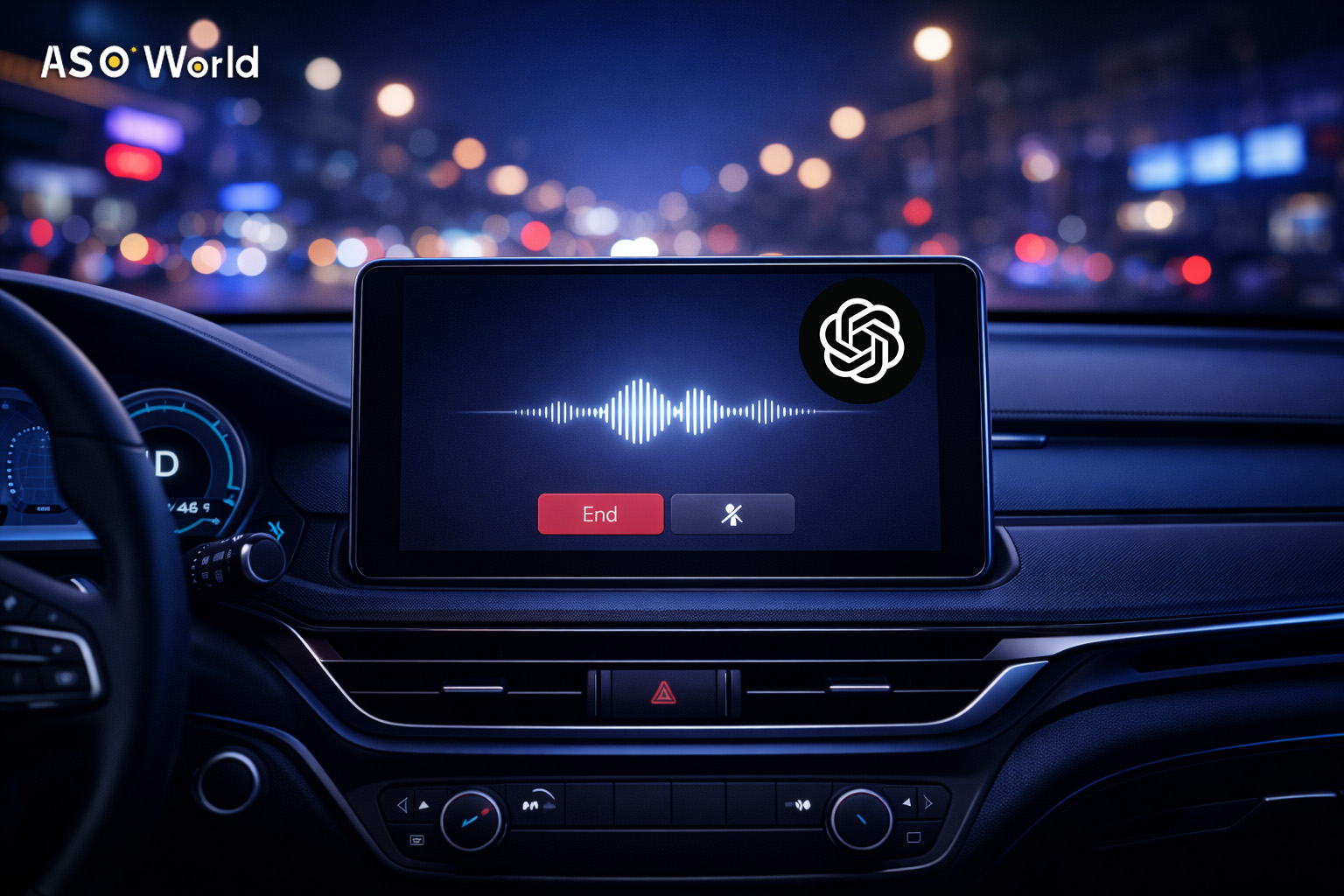
Minimalist Interface to Reduce Distraction
The CarPlay version of ChatGPT is streamlined for safety, showing only an End button and a mute/unmute toggle. There are no on-screen text, images, or replies, keeping focus on voice interaction. Users interact similarly to voice mode in the iPhone app. Apple’s guidelines state that voice-based apps must use voice as the primary interaction mode and optimize for the driving environment.
Design Limitations and Developer Insights
While accessible via the dashboard, ChatGPT cannot control vehicle functions or iPhone settings, and there is no wake word. Drivers must manually launch the app from CarPlay. Siri remains the default assistant, highlighting Apple’s controlled ecosystem.
For developers, this demonstrates how scenario-specific constraints—such as safety and environment—can drive minimalist, voice-first UX and context-aware application design.
Ecosystem Competition and Market Implications
Opening the Door for Other AI Assistants
ChatGPT’s CarPlay debut paves the way for Google Gemini and Anthropic Claude to create compatible versions, though updates are not yet announced. Apple also plans to expand Siri with chatbot-like functionality in iOS 27, originally slated for 26.4.
Strategic Takeaways for AI Apps
- First-mover advantage: Rapidly integrate with new platform APIs to capture emerging user scenarios.
- Scene-focused optimization: Tailor interactions for environment constraints like driving or hands-free use.
- Incremental engagement: Streamlined, voice-only interfaces can increase frequency and retention.
- Ecosystem leverage: Integrate across system capabilities for traffic growth and user stickiness.
This is a reference for AI and productivity apps looking to expand into niche, high-engagement environments.
Comments
ChatGPT’s launch on CarPlay illustrates how scenario-specific applications create new user touchpoints. Developers can learn voice-first interface design, environment-adapted UX, and strategic ecosystem integration. Early adoption in emerging platforms can translate to incremental traffic and engagement growth.
FAQ
What can users do with ChatGPT on CarPlay?
Full voice-based interaction; no text or images; optimized for safe driving.
Which iOS version is required?
iOS 26.4 or later is needed to access ChatGPT via CarPlay.
Will Siri still function?
Yes, Siri remains the default assistant; CarPlay allows additional AI apps for scenario-specific use.
What can developers learn from this update?
Focus on voice-first UX, scenario-specific design, and ecosystem integration. Optimize for safety, engagement, and platform adoption in specialized environments.

 Follow Us on Facebook