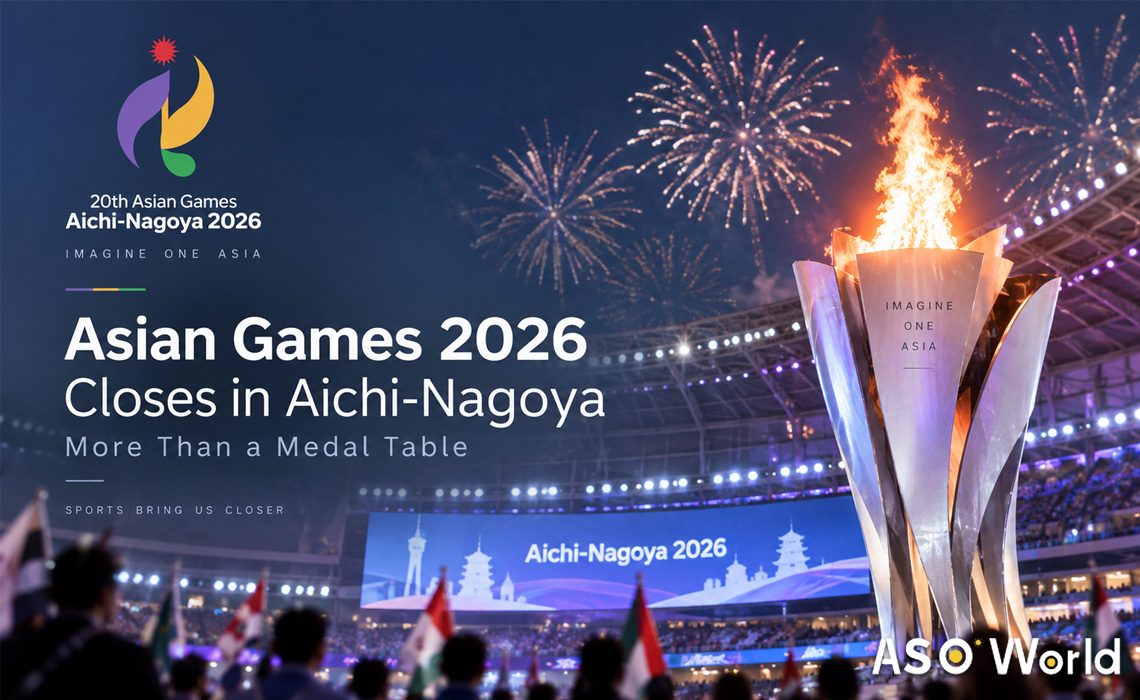

The 2026 Asian Games closes in Aichi-Nagoya on October 4, ending 16 days of competition across a region that contains some of the world’s deepest sporting cultures. The event’s size alone makes it remarkable: more than 11,000 athletes from 45 countries and regions are expected to take part, making it larger than the Summer Olympics by athlete count.
But a multi-sport event is never remembered only for a final table. It is remembered for the athlete who arrived unknown, the final decided by the smallest margin, the home crowd that transformed a venue and the moment that travelled from a stadium to millions of phone screens. The closing ceremony is where those separate stories become the public memory of the Games.
A competition built from many different audiences
One reason the Asian Games is so compelling is that it does not have a single centre of attention. Badminton, athletics, swimming, football, basketball, table tennis and a wide range of other sports each carry passionate, often distinct communities. A medal can be a local triumph in one country and a continent-wide conversation in another.
This means the final coverage should resist treating the event as a simple winners-and-losers list. A stronger recap connects the official numbers to the human stories: athletes making a breakthrough, teams surpassing expectations and performances that may shape the next Olympic cycle. It should also explain why a result mattered to the people watching it.
The Games in the social-media era
Major events now unfold across television, livestreams, short video, fan communities and athlete accounts at the same time. A dramatic race or decisive point can move globally before a conventional report is published. That changes how sporting legacy is made. The most enduring image may not come from a final itself; it may be an athlete’s reaction, a quiet act of sportsmanship or an unexpected behind-the-scenes moment.
Aichi-Nagoya has also used the Games as a chance to present its own identity. Host cities are judged by venues and logistics, but also by how they welcome visitors and translate a regional culture for a global audience. The closing ceremony is the final opportunity to make that story visible.
How to complete this recap responsibly
Before this article is published, insert the verified final medal table, three confirmed standout results and the official closing-ceremony highlights. Do not fill those spaces with predictions. The context is already clear; the facts that make this a completed news report must come from official results after the final events conclude.
Bottom line: The Asian Games matters because it brings together sporting excellence on a continental scale while creating stories that are intensely local. Its lasting legacy will be measured not only in medals, but in the athletes and moments people keep talking about after the flame goes out.

 Follow Us on Facebook