
As AI-generated music floods streaming platforms and generative tools become mainstream across iOS and macOS, Apple is moving aggressively to define what “responsible AI” looks like inside its ecosystem.
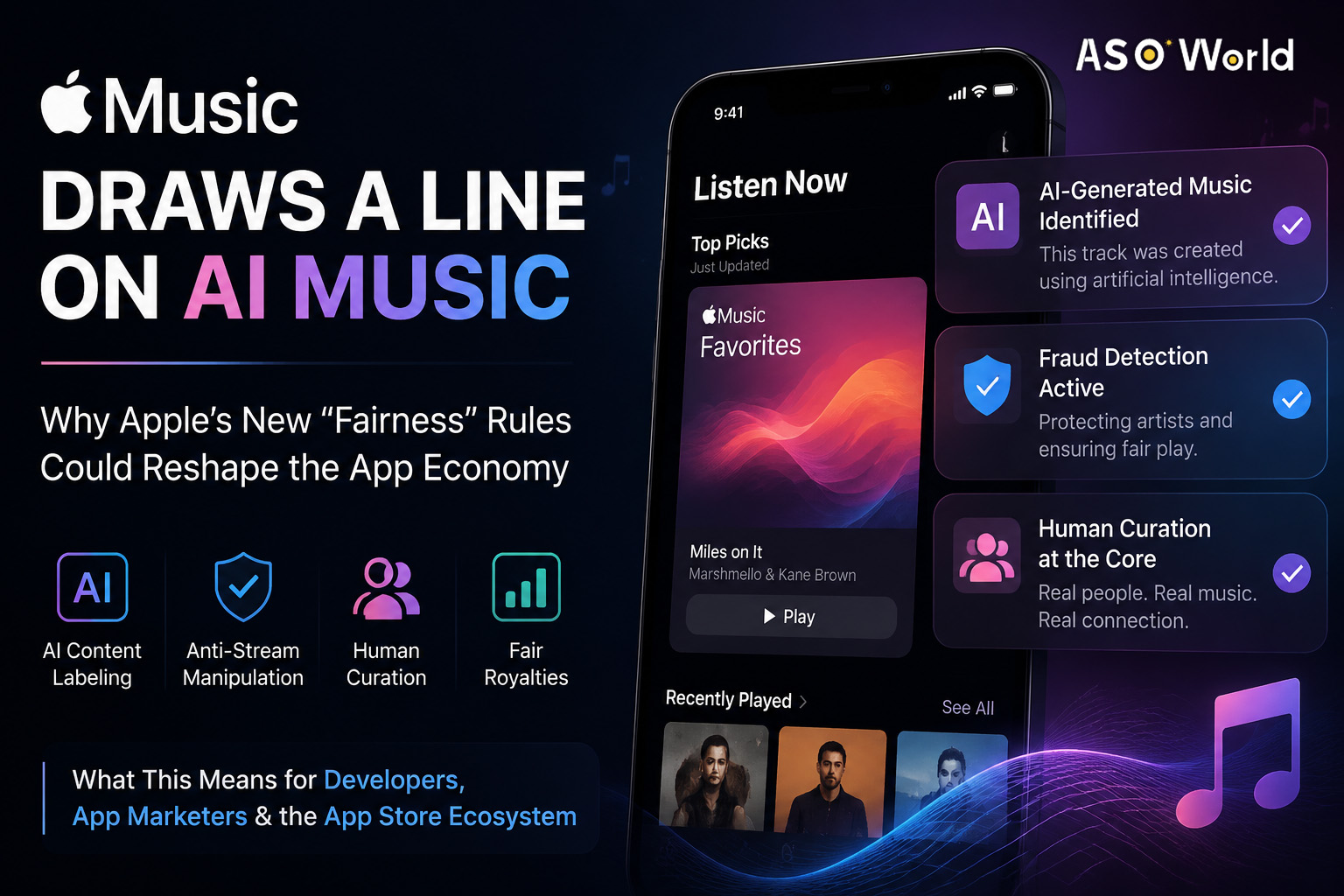
This week, Apple Music published an open letter titled “What We’re Doing to Keep Music Fair,” outlining new policies around AI-generated music, stream manipulation, and metadata transparency. On the surface, the announcement targets the music industry. But underneath, it reveals something much bigger: Apple is quietly building the governance framework that could influence how AI-powered apps operate across the App Store in the coming years.
For developers, app marketers, and subscription-based businesses, this is not just a music story. It is an early signal of how Apple may regulate AI-generated content, discovery systems, recommendation algorithms, and monetization integrity across the broader Apple ecosystem.
Apple Music’s AI Policy Shift Is Bigger Than Music
Apple confirmed that AI-generated music currently represents less than 1% of all plays on Apple Music. Still, the company is proactively implementing safeguards before the category scales further.
The most significant move is Apple Music’s requirement for AI-generated content tagging. Distributors are now expected to provide metadata identifying AI-created tracks, and Apple says this will become mandatory in the future.
At the same time, Apple has expanded internal AI-detection systems to identify:
- Fraudulent streams
- Spam uploads
- AI impersonation
- Artificial engagement manipulation
In 2025 alone, Apple excluded around 2 billion manipulated streams from royalty calculations. According to the company, stream manipulation rates on Apple Music are now below 0.5%.
This matters because Apple is signaling that algorithmic trust is becoming a platform-level priority. Whether the content is music, AI-generated images, productivity workflows, or App Store metadata, Apple increasingly wants verifiable authenticity signals.
Why Developers Should Pay Attention
AI Transparency Could Expand Beyond Apple Music
The AI labeling system introduced in Apple Music may become a preview of future App Store policy directions. Apple historically tests ecosystem governance changes in one vertical before expanding them platform-wide. Developers should not be surprised if future App Store guidelines require:
- Disclosure of AI-generated assets
- Transparency around AI-generated reviews or recommendations
- Labeling for synthetic content inside apps
- Stricter moderation for AI-generated spam
For AI-powered productivity apps, writing assistants, image generators, and workflow tools on iOS 26 and upcoming iOS 27 beta environments, this creates both risk and opportunity.
Apps that can demonstrate transparent AI usage and trustworthy workflows may gain stronger positioning in the App Store ecosystem as Apple prioritizes platform integrity.
Subscription Apps May Benefit Most from Apple’s AI Direction
Apple Is Rewarding Trustworthy Utility Over Viral Engagement
One subtle but important takeaway from Apple’s announcement is that the company continues prioritizing long-term subscription ecosystems over short-term engagement spikes.
Apple Music emphasized:
- Human curation
- Recommendation quality
- Editorial trust
- Fraud reduction
- Sustainable creator payouts
That philosophy mirrors broader App Store trends already impacting productivity apps and SaaS-style subscription models. In recent years, many developers relied heavily on aggressive growth tactics:
- Incentivized installs
- Artificial engagement loops
- Low-quality AI content generation
- Subscription dark patterns
Apple’s latest AI governance push suggests those strategies may become increasingly risky. Meanwhile, apps that focus on:
- Workflow efficiency
- Genuine utility
- Retention
- High-value subscriptions
- AI-assisted productivity
This is especially relevant for:
- AI note-taking apps
- AI writing assistants
- AI scheduling tools
- macOS productivity software
- Creative workflow applications
What This Means for App Store Optimization
Trust Signals May Become the Next Major Ranking Factor
ASO strategies are evolving rapidly as AI-generated content becomes easier to mass produce.
Historically, visibility depended heavily on:
- Keywords
- Ratings
- Download velocity
- Conversion rates
But Apple’s anti-manipulation initiatives suggest future ranking systems may increasingly evaluate:
- Authentic engagement
- Subscription retention
- Behavioral trust signals
- Content quality consistency
- AI transparency
Comment
This creates a major challenge for low-quality AI-generated “spam apps” flooding the App Store. At the same time, it creates opportunities for developers building legitimate AI-powered productivity ecosystems with strong retention and clear differentiation. For marketers, the lesson is becoming clear:The era of scaling purely through algorithmic loopholes may be ending. Sustainable growth increasingly depends on trust, retention, and ecosystem credibility.

 Follow Us on Facebook