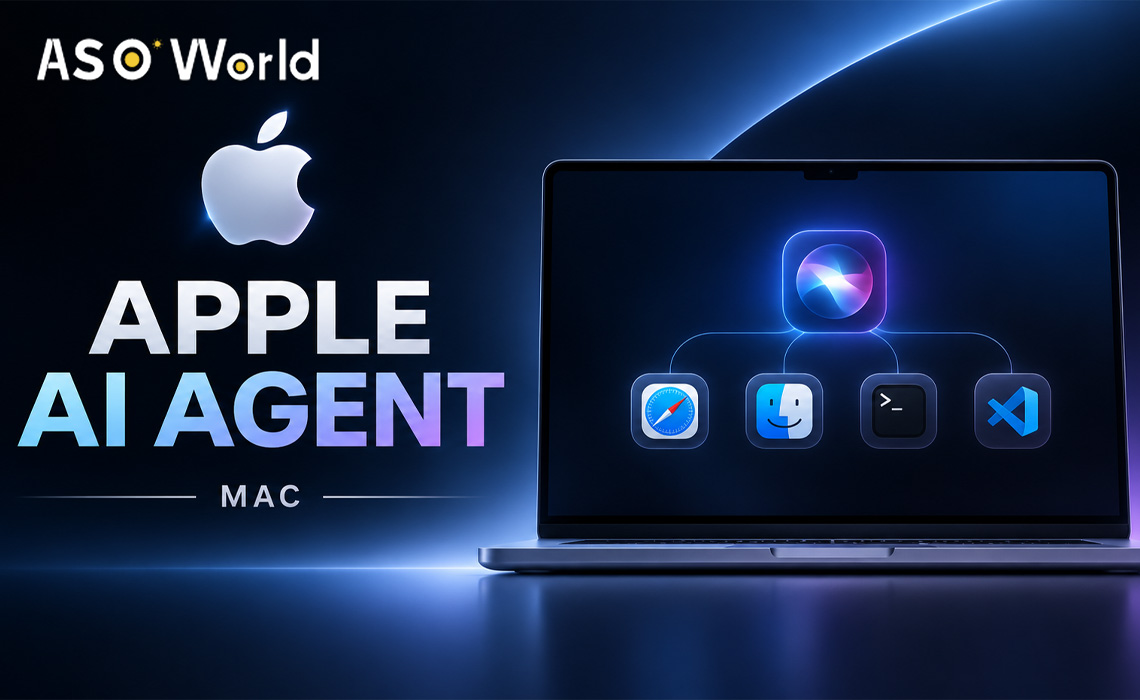

Apple is developing an AI agent designed to operate a Mac the way a person would, according to a report based on a recently posted job listing. The role, for a senior engineering manager, describes an agent that browses the web, works across apps, runs commands, writes and debugs code, and chooses the right tool for each step. Apple has not commented, and the work is said to be at an early stage.
What the Job Listing Actually Says
The posting, first surfaced in a report on Apple's hiring, seeks a senior engineering manager to lead work on an agent that can operate a computer. Its description is unusually explicit for a public job ad:
"Imagine an AI agent that can use a computer the way a capable person does. It browses the web, works across apps, runs commands, writes and debugs code, and calls services, and it chooses the right tool for each step. It does all this privately and with the polish people expect from Apple."
The listing also asks for agents that move "fluidly between tools" and carry out "multi-step tasks across apps, browsers, command lines, code, and APIs." That is a description of computer-use automation, the category OpenAI, Anthropic and others have been shipping for the past year — an agent that clicks, types and navigates on a user's behalf rather than merely answering questions.
Reported vs Confirmed
| Claim | Status |
|---|---|
| Apple is hiring for a computer-use AI agent team | Confirmed by the job listing |
| The agent would run on macOS | Implied, not stated |
| Launch as soon as the end of 2027 | Reported, unconfirmed |
| Development is at an early stage | Reported, unconfirmed |
| Integration with Siri or Apple Intelligence | Unknown |
| Apple has commented | No |
A job posting is evidence of intent, not a product plan. Companies hire for projects that ship years later, get reorganised, or never leave the lab. The listing is the strongest signal available, and it is still only a signal.
The Privacy Paradox
The more revealing story sits beside the hiring news. As Apple builds its own agent, it is making it harder for competing agents to operate Macs with full access. The upcoming macOS 27.3 release is reported to add warnings discouraging users from granting third-party agents complete control of their machines.
Apple signalled the change to developers in October, saying it would "introduce additional controls to ensure that users who genuinely wish to grant an app this extraordinary level of access can only do so with very explicit user action." The macOS 27.3 betas already include revised Full Disk Access permissions, so the groundwork is in place.
Read together, the two moves describe a familiar Apple strategy: keep the deepest system access for features the company controls, and surround third-party access with friction. The security argument is legitimate — an agent with full disk access can read every file on a machine — but it also functions as a competitive moat. An Apple agent that can reach anything, competing against rival agents that trigger warnings, is a different product from one competing on merit alone.
Why This Matters Now
Computer-use agents have moved from demos to shipping products over the past year. OpenAI and Anthropic both offer agents that can operate a desktop, Meta has pushed into the category with its Muse line, and enterprise buyers are testing them for repetitive back-office work. Apple is the largest platform holder without a first-party equivalent.
The company's AI effort is also entering a new phase under John Ternus, with Siri AI expanding across apps and a redesigned Health app arriving in iOS 27.3. An agent that operates the whole machine would be the logical next step: it turns Siri from an assistant that answers into one that acts.
That is also where the risk concentrates. An agent that can run commands and edit code can delete files, expose data or follow a malicious instruction embedded in a web page. Apple's marketing promise — "privately and with the polish people expect" — is a claim about reliability and consent, and it will be judged on exactly those failures.
What to Watch Next
More job listings.
A single posting is thin evidence. A cluster of roles across model training, evaluation and privacy engineering would confirm a funded programme.
The macOS 27.3 release notes.
How Apple words the third-party agent warnings will indicate whether the restriction is a security measure, a competitive one, or both.
Developer reaction.
If agent vendors cannot obtain full access without user friction, expect public complaints and possibly regulatory attention in the European Union, where platform access rules already apply.
Any Siri roadmap signal.
Apple has not said whether this agent is a Siri feature, a separate app or a developer API. That choice will determine whether it competes with third-party agents or merely with their underlying models.

 Follow Us on Facebook