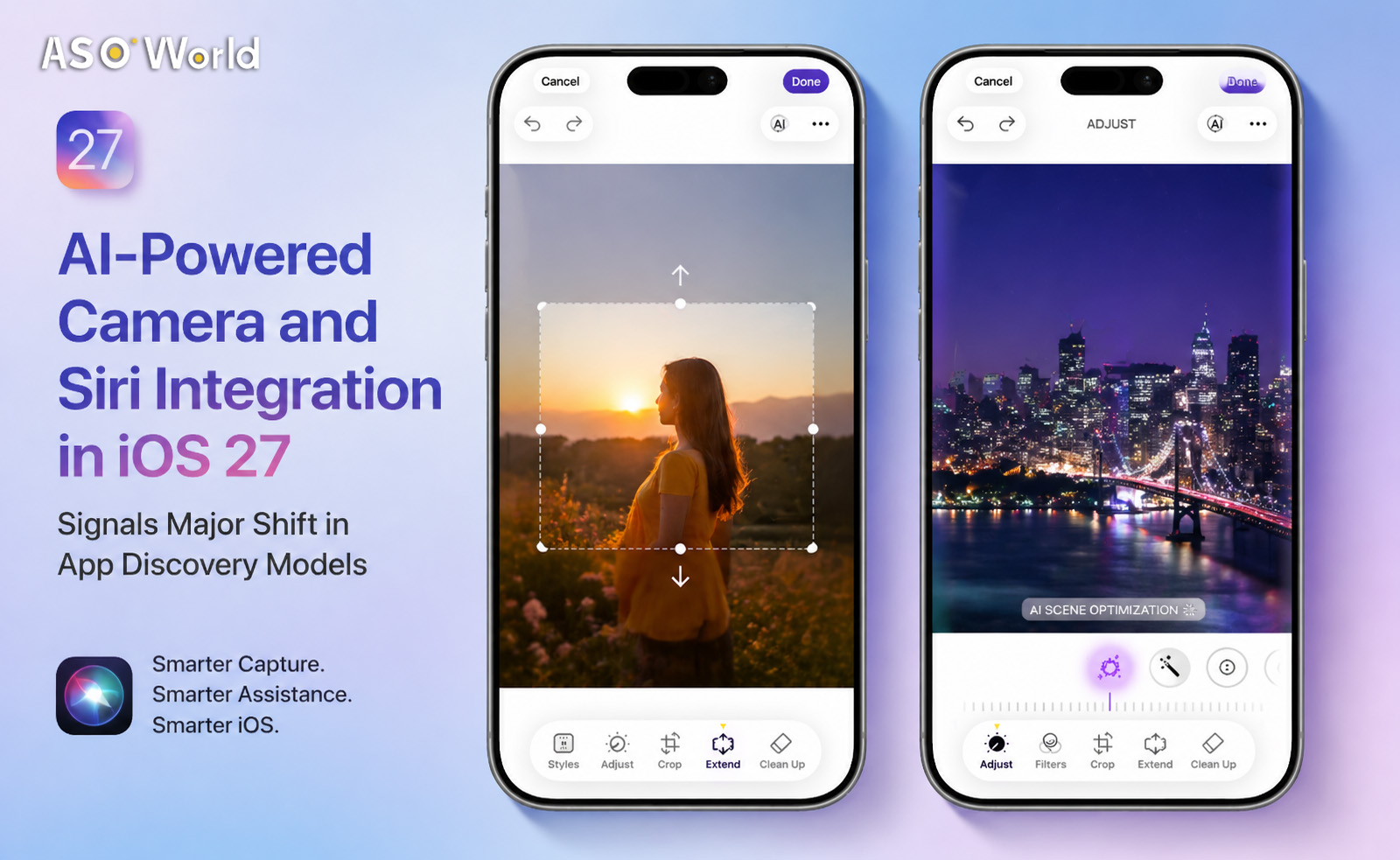

iOS 27 is expected to introduce deeper artificial intelligence integration across the iPhone system, particularly within the camera, Siri, and visual intelligence layers. Instead of existing as isolated features, AI capabilities will be embedded directly into core system interactions.
Beyond feature updates, this shift points to a structural change in mobile discovery: how users find apps, how traffic is distributed, and how growth strategies are built in a post-keyword ecosystem.
Camera Becomes a New AI-Powered Discovery Entry Point
From image capture to real-world app triggering
The camera is evolving into a real-time recognition and interaction layer powered by AI. Users will no longer only take photos but interact with objects, scenes, and environments that can trigger contextual responses. This transforms the camera into a discovery surface rather than a capture tool.
Shift from search-based traffic to contextual acquisition
Instead of typing keywords into App Store search, users may discover apps through:
- Object recognition
- Scene understanding
- Visual prompts linked to services
This reduces dependence on traditional ASO-driven acquisition flows.
Impact on growth metrics and install patterns
Potential market effects include:
- Decline in keyword search-driven installs
- Increase in spontaneous, intent-based installs
- Higher conversion rates due to stronger contextual relevance
Siri Becomes the Unified AI Discovery Layer Across iOS
Visual Intelligence merged into Siri ecosystem
Apple is expected to move Visual Intelligence directly into the camera experience and rebrand it under Siri, turning Siri into a unified AI interface layer. This removes fragmentation between search, camera, and assistant functions.
From keyword search to intent interpretation
Siri may evolve from responding to commands to interpreting intent across:
- Visual input
- Voice queries
- System-level context
This shifts discovery from “what users type” to “what users mean.”
Implications for ASO and metadata strategy
If Siri becomes a primary discovery engine:
- Keyword ranking importance may decrease
- Semantic relevance becomes more important
- App content structure may influence visibility more than store metadata
Developers looking for structured guidance on adapting to new discovery channels can consult resources like The Ultimate App New Version Launch ASO Checklist 2026 for step-by-step strategies to maximize visibility and downloads.
AI Photo Editing Signals a Shift Toward Content-Driven Engagement
Generative editing replaces traditional photo tools
New AI tools may include:
- Image expansion beyond frame boundaries
- Automatic enhancement of lighting and color
- AI-based recomposition of images
This marks a transition from editing content to generating content.
Higher content standards across app ecosystems
As system-level tools improve image quality:
- User expectations for visuals increase
- Social, e-commerce, and creative apps face higher competition
- Low-quality content becomes less effective for engagemen
Engagement and retention impact
Stronger AI-generated content may lead to:
- Increased CTR across visual apps
- Higher competition for user attention
- Greater differentiation pressure for app experiences
Apps that want to capitalize on content-driven growth can review localization strategies and budget-conscious content optimization in guides like App Localization Guide: How to Grow Your App in India with a Limited Budget in 2026
Structural Shift in App Discovery Economics
Decline of keyword-based acquisition efficiency
Traditional ASO models relying on keyword ranking may lose effectiveness as discovery shifts toward AI-driven contextual triggers. Apps that fail to optimize for intent-based discovery may see reduced visibility and lower install volumes, even if their keyword rankings remain high.
Rise of intent-driven and system-level distribution
App visibility may increasingly depend on:
- Real-world context
- User intent signals
- AI interpretation layers embedded in iOS
Developers looking to adjust their ASO strategies in response to system-level AI discovery can refer to comprehensive guides like
ASO Guide: How to Optimize App Store Product Pages on iOS & Google Play
Strategic implications for developers and investors
This shift suggests:
- Higher importance of product–context alignment
- Increased value of AI-compatible app design
- Potential redistribution of acquisition costs across categories
Comments
The expected iOS 27 changes suggest a structural transformation in mobile ecosystems, where AI becomes the primary layer connecting users to apps. Discovery is shifting away from keyword search toward contextual, intent-based and system-driven interactions, significantly impacting ASO and user acquisition models.
FAQ
1. Will traditional ASO still matter after iOS 27?
It will still exist, but its influence may decline as AI-driven discovery grows.
2. What is the biggest change for app developers?
Traffic may shift from search-based installs to context and real-world triggered discovery.
3. Which apps are most affected by this shift?
Apps in e-commerce, utilities, travel, and visual content are likely most impacted.
4. How should growth teams respond?
Focus should move toward intent optimization, contextual use cases, and AI-compatible app experiences.

 Follow Us on Facebook