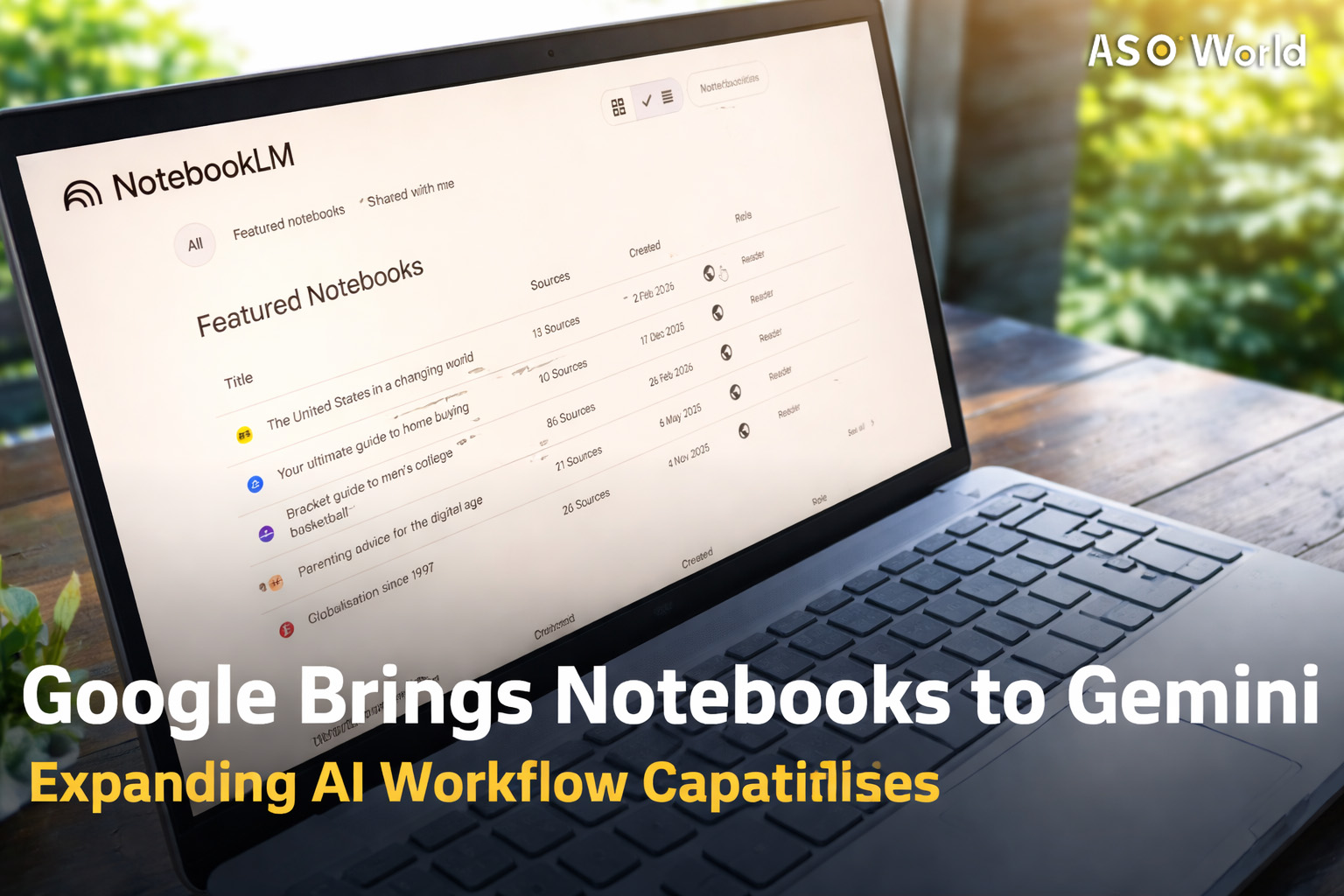

Google has introduced a notebook integration feature in Gemini that synchronizes with NotebookLM, marking a significant evolution from a conversational AI assistant into a structured knowledge platform. This update is not merely a functional enhancement—it reflects a broader strategic shift toward ecosystem-driven competition, where user workflows, data ownership, and platform stickiness define market leadership.
Feature Breakdown: From Chat Tool to Knowledge Infrastructure
NotebookLM Integration Enables Structured Knowledge Workflows
The new feature allows users to connect Gemini directly with NotebookLM, enabling access to curated documents, research files, and long-form content within a unified interface. Instead of relying on fragmented prompts, users can now build persistent knowledge bases that Gemini can continuously reference. This fundamentally changes how AI is used in professional scenarios, particularly for developers and technical users who rely on documentation, specifications, and iterative research.
Source-Based Reasoning Improves Reliability and Trust
A critical upgrade lies in Gemini’s ability to generate responses grounded in user-provided sources. By referencing documents stored in notebooks, the AI reduces the risk of hallucinations and produces outputs that are traceable and verifiable. For software engineers and technical professionals, this represents a meaningful step toward production-grade AI usage, where accuracy and accountability are essential.
Persistent Context Creates Long-Term User Value
Unlike traditional AI chat tools that reset context across sessions, notebooks act as a persistent memory layer. Users can continuously refine, expand, and reuse their knowledge repositories, allowing Gemini to deliver increasingly relevant outputs over time. This shift transforms AI usage from short-term interactions into long-term dependency, significantly increasing product stickiness.
Multi-Document Analysis Unlocks Advanced Use Cases
Gemini can now synthesize insights across multiple documents within a notebook, enabling tasks such as comparative analysis, structured report generation, and technical summarization. This positions the product closer to specialized productivity tools, effectively bridging the gap between AI assistants and professional software.
Why This Feature Matters for Market Expansion
Expanding from Feature Utility to Workflow Ownership
The integration of notebooks allows Google to move beyond offering isolated AI capabilities and toward owning entire user workflows. In the past, AI tools competed on response quality and speed. Now, the competition is shifting toward who controls the environment in which users think, write, and build. By embedding Gemini into the research and documentation process, Google increases user dependence and reduces the likelihood of switching to alternative tools.
Strengthening User Retention Through Data Lock-In
Notebooks introduce a powerful retention mechanism: user-generated data. As individuals and teams upload documents, organize insights, and build knowledge repositories, they create switching costs that discourage migration to competing platforms. This data-centric strategy is particularly effective in the developer and tech audience, where accumulated knowledge assets are highly valuable and difficult to replicate elsewhere.
Capturing High-Intent, High-Value User Segments
The design of the notebooks feature clearly targets users engaged in complex, high-value tasks such as software development, technical research, and documentation. These users exhibit higher engagement frequency, longer session durations, and stronger willingness to adopt paid tools. By focusing on this segment, Google is not only improving product relevance but also optimizing for long-term monetization potential.
Positioning AI as a New Distribution Layer
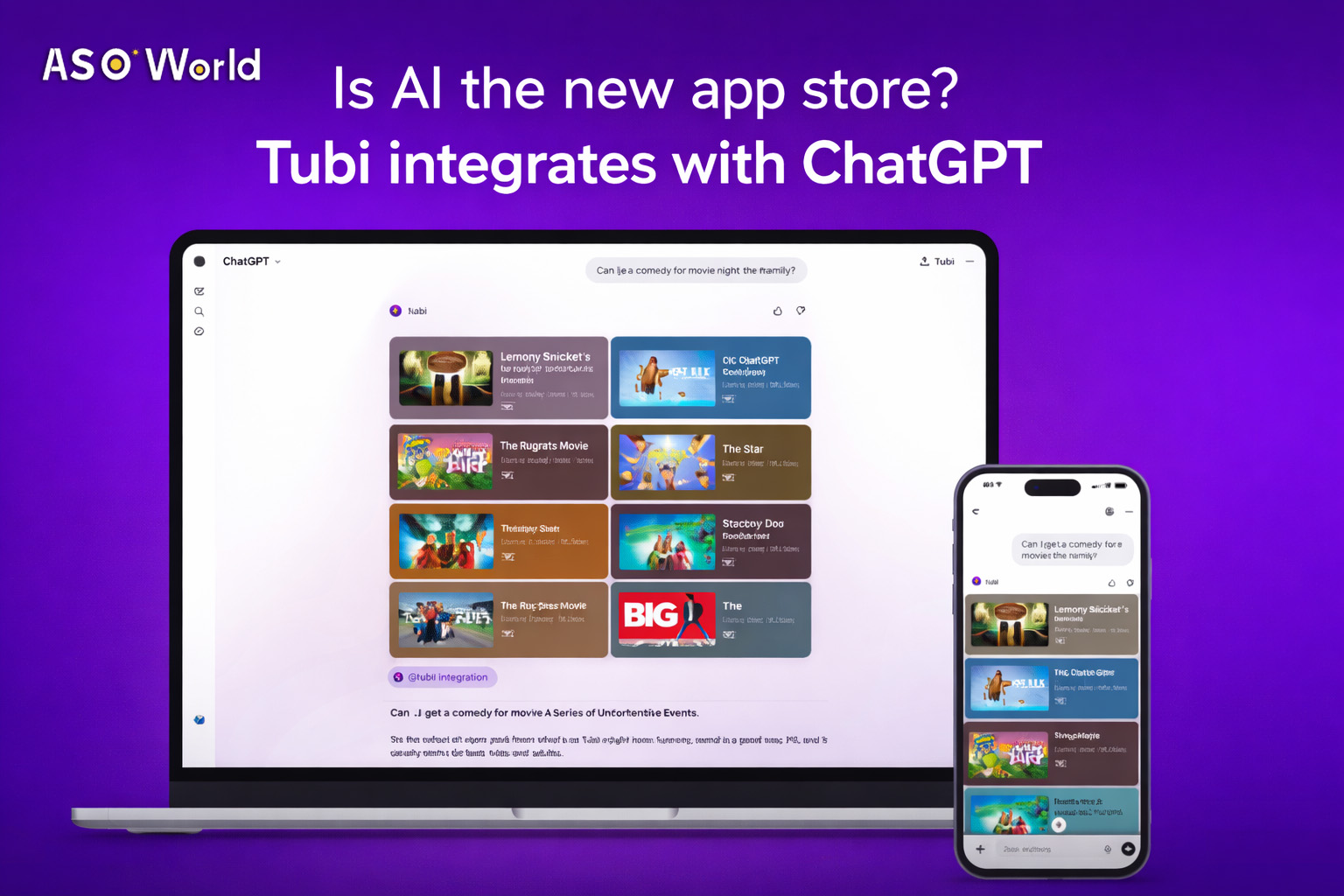
Perhaps the most strategic implication is the emergence of AI platforms as distribution channels. As users spend more time داخل Gemini managing workflows, the platform itself becomes a gateway for discovering tools, services, and content. This mirrors the evolution of app stores but shifts the entry point from search and browsing to AI-driven interaction. In this context, notebooks serve as the foundation for future integrations, where third-party services could be embedded directly into user workflows.
Strategic Implications for Developers and Tech Teams
Building Products Around Workflows Rather Than Features
The introduction of notebooks highlights the importance of designing products that integrate into broader workflows. Developers should move beyond standalone features and consider how their tools can participate in end-to-end user journeys. For example, instead of offering isolated utilities, products can be positioned as components within research, development, or content creation pipelines.
Treating Data as a Core Product Asset
The success of notebook-based systems underscores the value of structured user data. Developers can learn from this approach by enabling users to store, organize, and reuse their own data within applications. This not only enhances functionality but also increases retention by making the product more integral to the user’s daily processes.
Leveraging AI Platforms for User Acquisition
As AI assistants evolve into primary interfaces, they present new opportunities for distribution. Developers should explore ways to integrate their services into platforms like Gemini, whether through APIs, plugins, or content optimization strategies that make their tools discoverable within AI-generated responses. This represents a shift from traditional app store optimization toward AI-centric visibility strategies.
Designing for Long-Term Engagement and Context Continuity
The emphasis on persistent context suggests that future products will compete on their ability to maintain continuity across sessions and tasks. Developers can differentiate their offerings by enabling long-term memory, personalization, and adaptive behavior, ensuring that users derive increasing value over time.
Comments
The integration of notebooks into Gemini reflects a broader industry transition from tool-based competition to ecosystem-based competition. For developers, the key takeaway is not simply to adopt AI features, but to rethink product design around workflows, data, and distribution channels. Those who align early with AI platforms and prioritize long-term user value will be better positioned to capture growth in an increasingly consolidated market.
FAQ:
What does Gemini’s notebook feature do?
It syncs with NotebookLM to provide structured knowledge management and context-aware AI assistance.
Why is this important for market expansion?
It increases user retention, captures high-value users, and positions AI as a distribution platform.
How should developers respond to this trend?
By integrating into AI ecosystems, focusing on workflows, and leveraging data-driven product design.
Will AI platforms replace traditional app stores?
They are unlikely to replace them entirely but are becoming a significant complementary distribution channel.

 Follow Us on Facebook