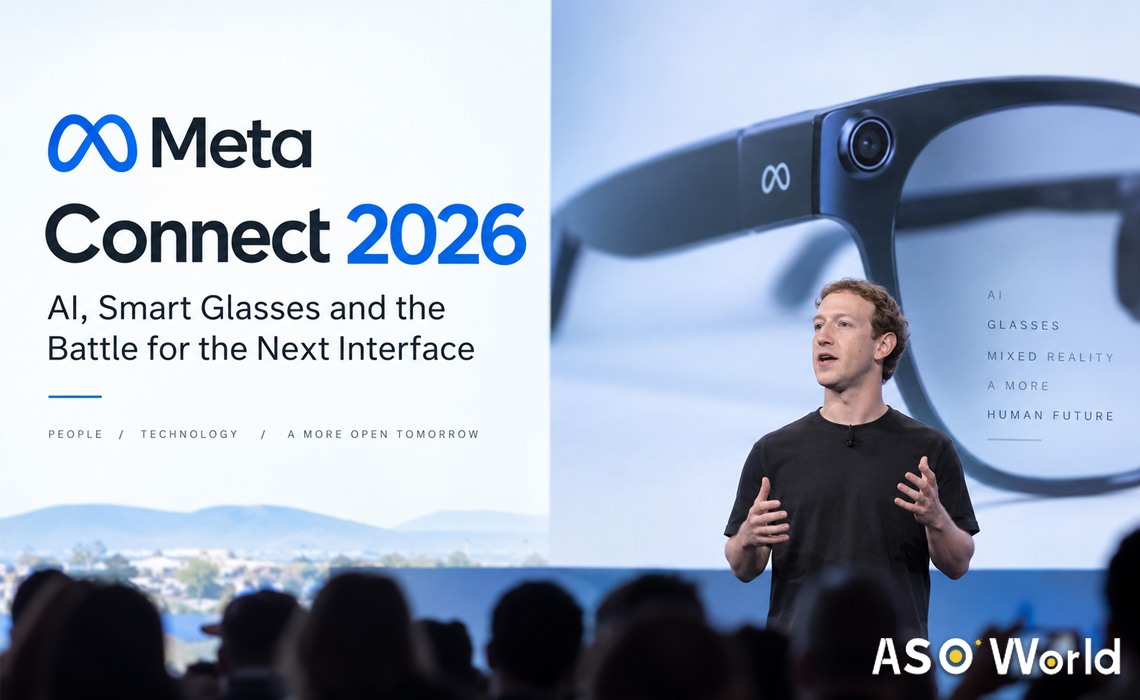

Meta Connect is no longer a niche event for virtual-reality enthusiasts. It has become a measure of how seriously the world’s largest social-media company believes it can reshape the way people interact with technology after the smartphone. This year, the stakes are unusually clear: Meta has to show that artificial intelligence, smart glasses and mixed reality can solve real problems, rather than merely produce impressive stage demos.
The company’s advantage is scale. Meta already has billions of people using Facebook, Instagram, WhatsApp and Messenger, and it has spent years building hardware and AI infrastructure around those services. Its challenge is trust. A pair of glasses that can see, listen and answer questions can feel magical; it can also raise immediate questions about privacy, consent and how much of daily life should be mediated by an assistant.
Smart glasses have become Meta’s most practical bet
Virtual reality asks people to enter a new environment. Smart glasses make a more modest request: keep wearing something familiar, but add a camera, microphones, speakers and an AI layer. That is why this category has moved to the center of the industry’s attention. The product succeeds only if it is comfortable enough to wear, useful enough to reach for and discreet enough not to make everyone nearby uneasy.
At Connect, the details worth watching are not just resolution or processor speed. Does Meta demonstrate genuinely hands-free help with navigation, translation, memory, accessibility or capture? Are privacy indicators clear enough that people around the wearer can understand when a camera is active? And can battery life support ordinary use instead of a short showcase? These are unglamorous questions, but they determine whether smart glasses remain a curiosity or become a daily device.
The more important story may be AI with context
Chatbots made AI visible to a mass audience. The next step is an assistant that knows what a person is looking at, hearing or trying to do. Meta’s products give it potential surfaces everywhere: a conversation in WhatsApp, a Reel on Instagram, a photo, a pair of glasses, or a mixed-reality headset. The promise is less typing and less searching. The risk is that an assistant becomes overconfident, intrusive or difficult to control.
Readers should look for clear answers on three points. First, what data stays on a device and what is processed in the cloud? Second, can users see, correct or delete information the assistant has used? Third, are the features being released widely, or are they limited demonstrations? A feature announced without availability, supported regions or a clear use case is not the same thing as a product change people can experience.
Creators will decide whether the platform has momentum
Hardware does not create an ecosystem by itself. Creators, developers and publishers need a reason to experiment with a new format. If Meta introduces new AI video tools, immersive social spaces or advertising products, the immediate question should be whether they help someone make better work or simply add another surface to manage.
That matters because the battle is no longer only about headsets. Apple, Google, Samsung and a growing group of AI-hardware companies are all trying to define what comes after the phone. The winner may not be the company with the most futuristic device. It may be the one that makes a new interface feel normal before anyone notices it has happened.
What would count as a meaningful Connect?
A successful event would leave people with a simple explanation of why Meta’s next devices or AI tools matter in everyday life. It would offer practical features, credible privacy controls and a route for developers and creators to build on them. The biggest headline may come from a new product, but the lasting test will be whether people are still using it weeks later.

 Follow Us on Facebook